

Fred Schwoebel: The Mountains Will Wait For You

Photo Courtesy: www.oregonlive.com   

Photo Courtesy: www.oregonlive.com  


The way in which first-time filmmaker Fred Schwoebel came to make his film about Grace Hudowalski is one of those stories that fate played a large hand in.

How do you explain how a back packer from Portland Oregon, who had never even heard of the Adirondacks 20 years ago, came to Schroon Lake to make the only documentary film on Grace?

Well, if it wasn’t for Fred’s mother-in-law, and a story about gardening in a newspaper, this film may never have been made.

“Before I show the movie I tell the story of why is a guy from Portland, Oregon making this?  The answer is:  I had just moved here from Nashville, Tennessee, where I was working in films as an art director, and as looking to re-invent my self out here,” Fred told Schroon Laker last week from his Portland home.

“In the meantime, my mother in law, living in Ventura California, had clipped a newspaper article about gardening out of the Ventura Free Press and sent it to me with a letter. I read the letter and read the gardening article and you know how  -- for one reason or another -- I flipped it over and there was an AP article by Mary Ashe that was entitled “Climbers Scale Peaks, Write Letters”, and it was an article about Grace.

“You know there are times when art just comes in a moment and I said I’m doing that – that was 1993”.

And when Fred says he’s  “doing that” –  it was not his intention to climb the 46 Peaks - but rather tell Grace’s story in a documentary.

“I called long distance to Albany, got a number and told her I wanted to meet her, first of all, and I told her about the documentary I wanted to do about the letter writing and The 46ers.

“I made a trip out in May of 1993, came back that same year in late September with a cameraman, when the fall colors were peaking, and sat and with Grace and would turn the camera on every time she’d speak. It was a cinéma vérité approach – to try to collect everything we could.”

Fred returned to Portland where he “ran into a fundraising obstacle” to finish the film. 

“At that time you couldn’t edit in your home or on a computer”.

Fred got busy with life, starting a family, and got back into art direction. Those videotapes with Grace’s story on them sat unedited in boxes for the next 18 years.

But all that changed two years ago, when technology and software for film editing came drastically down in price. Fred was approached by a friend (who edited the film) and he bought Final Cut software and started the arduous process of cutting the film.

So what was it in that original AP article that appealed to Fred? Grace’s back-story? The letter writing? Her unique character?

“I’m a life long back packer and love being out in in the mountains. Her story resonated with me on that level. But really what caught my eye was the letter writing and the fact that Grace through her entire lifetime, answering those letters, her dedication, her love of mountains, her service to people was really impressive”.

How did she react about being the subject of a film?

“The thing that impresses me the most is that I cold called her out of the blue and told her I read this article and I wanted to meet her. She said: ‘Well you’ll come and stay with me. She was 87 at the time.  Nowadays, people would say:  ‘I need some information or give you direction to the Ramada’”.

Fred has nothing but special memories of Grace and his time at her camp in Schroon Lake.

“When we came back to shoot -- I stayed with her both times – that openness and gregarious nature was infectious.  She knew I loved mountains also. As soon as I imparted that information, we had a shared love.

Grace’s climbing days were well over when Fred shot the documentary. But she was still very connected to the 46 Peaks and 46ers, Fred said.

“In the documentary she talks about climbing one of the high peaks at 80 years old. She knew every inch of every trail in the Adirondacks. When she was typing those letters it was her way of being still connected to the mountains”.

Fred says Grace’s camp in Schroon Lake was fairly rustic.

“It was modest and filled with things she collected and people gave her. She loved hummingbirds, and feeding the raccoons and she had a cat called K2, so her environment there was very reflective of her love of animals and love of hiking and of the Adirondacks themselves.

Another twist of fate in getting the movie made is how Fred got country legend Johnny Cash to record the narration for the film.

“He’s my father in law, I married his youngest daughter. (Tara Cash Schwoebel)”

In 1993, after a northwest tour on the west coast, Fred handed Cash a storyboard and a treatment for his proposed film.

“He put it in his briefcase and said: ‘I’ll let you know’. He wanted to look and see what he was getting himself into. He wrote me a letter back and said you name a place and time and I’d be happy to do it, so that’s how that happened. I wrote the script and he recorded it with his sound engineer back in Nashville.

“This is the first film I’ve made and the only film I’ve made. When I was skating though this I said to myself wow – did I get lucky, I just recorded the straight narration  -- no pick up lines. A bit of beginners luck? –- I’d say so”.

As a first time filmmaker did Fred have any idea what he was getting himself into?

“The way I look at it is the story and idea came to me, and so the difficult part was the technical aspect”

With his career in film art direction, everything was in front of the camera.

“Post production (editing, sound recording and color correction) was totally unfamiliar and new to me. That was the real obstacle, but I had good people here in Portland”.

For the two screenings in Schroon Lake, the film will be introduced by Doug Arnold, who is heading up the Grace Peaks Committee.

Doug, a winter 46er, is the Chair of the Grace Peak Project. The group has been working for almost 10 years to rename East Dix to Grace Leach Hudowalski #9.

Fred said she is so worthy of the honor and hopes the film can help.

“Part of the purpose of my film is to help promote the naming of Grace Peak”.

We wish Doug and Fred all the best in their efforts. For more information about the Grace Peaks effort you can contact Doug here 

Where and When: Friday and Sunday, August 30 & Sept. 1 at 6pm @ The Strand Movie Theater. 44 minutes.
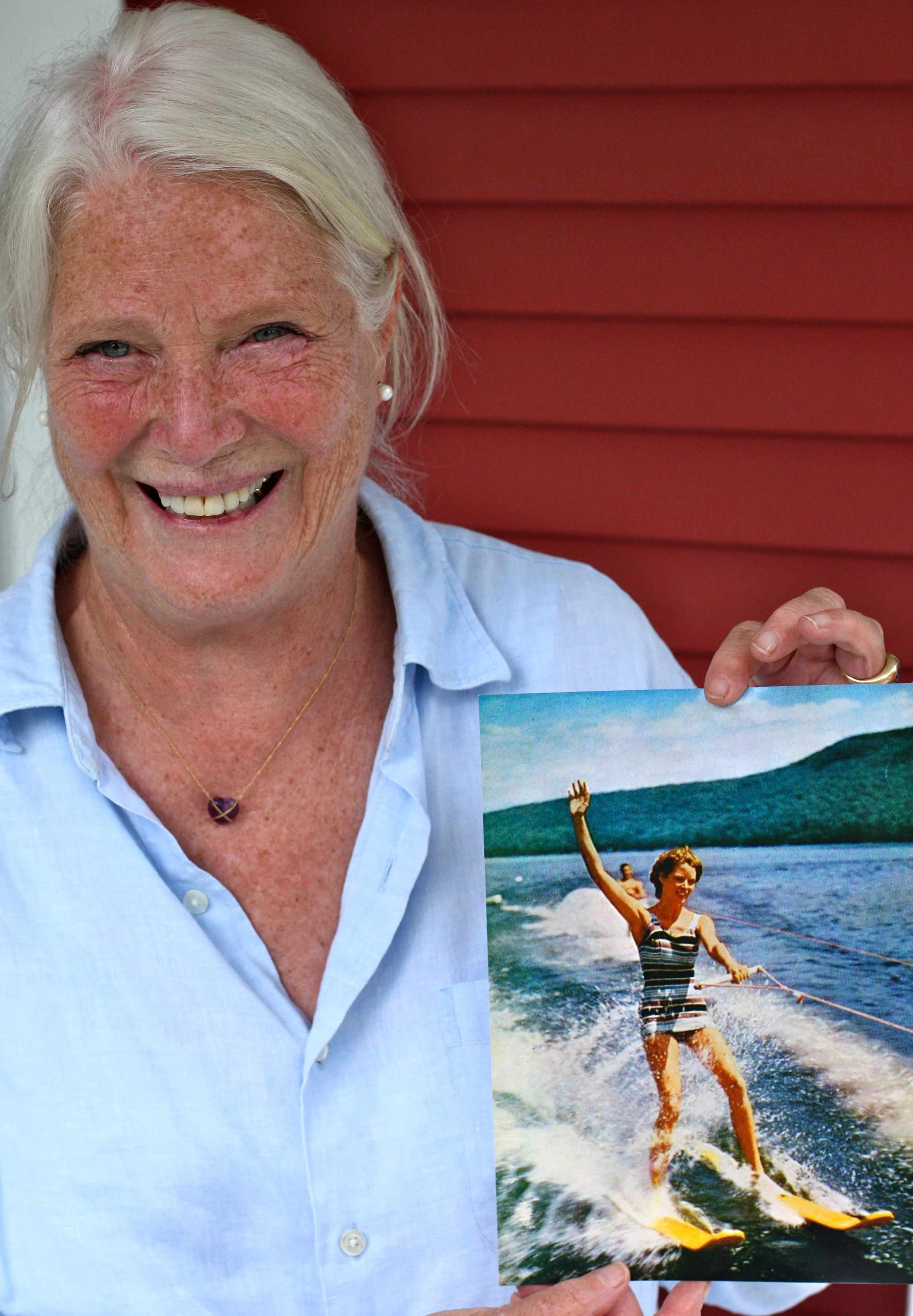
 

Teddy Clautice

IMG_7589.jpg

Our Schroon Laker.com business card is based on a 1950s era advertising brochure, featuring a young woman smiling and showing off her water skiing prowess. 

We’ve often wondered who that young woman was -- and whatever happened to her. Recently -- that wait came to an end, as we hooked up with Janet “Teddy” Clautice, still beautiful after all these years.

Teddy Clautice will never forget the day as a 16 year-old -- at the Schroon Lake Central School -- that she got a call from gal about town, Aletha Haley.

The way Teddy remembers it, Aletha was a columnist for the Ticonderoga Sentinel. 

“She knew everybody, went to all the weddings and the funerals, she was a very capable, was active in staging events -- she called and said we have a professional photographer coming and we are going around to film a lot of places, people and activities.  And she said: ‘Would you like to waterski and be on a post card?’ “And I said sure, I would.”

Teddy and I were chatting in the library of the Paradox House. Fate had bought us together. I had been tipped to her name more than a year ago, and learned she lived out west. going by Janet "Teddy" Parkinson. This past July, I got a call out of the blue from her husband Tom, telling me she would be in town for a family re-union.

So what are her memories of that day in 1956, when the shot was taken?

“I didn’t take long and it went great. They didn’t have to retake it because my hair is dry, so I’m sure I left from a dock and returned to a dock”.

At the time, Teddy said she had no idea how the picture would be used.

“I didn’t even know if they would use it. My reaction when I first saw it? I was thrilled and proud of it, proud of myself and was completely delighted. And I still am.”

Teddy says the male skier in the background is Bill Bert. He was from New York City and worked as a waiter while in college.

“He got a degree in engineering. He was dark haired and very handsome. I’m sure he wishes he was in front in the picture.

That summer Teddy was a dance instructor at camp Woodmere -- now Southwoods.

She started off a “Baby Woodmere.” I was the youngest camper at 5 years old, and my mother was camp nurse. We were there as we waited for my first father to come home from World War II, which he never did”. 

What follows next is Teddy’s life story, which incorporates tragedy, happiness, a big chunk of Schroon and Paradox Lake in its heyday, history and a life full of wonderful memories, experiences, family and friends.

It’s a life that started in Baltimore, where Teddy’s mom met her father. 

“My mother was from North Dakota and went to Baltimore to nursing school, where she met my birth father. He studied psychiatry and general surgery and decided he wanted a small practice and moved to Schroon Lake in 1940. We lived in a little white house on the far side of the school, which is still there. His office was the first room on the left.

“I was less than a year old when we moved there and after Pearl Harbor he enlisted. I was three years old.  After a few postings in the US he shipped out to England and was assigned to a psych hospital for returning Americans.

“That summer of 1945 my mother and I went to Camp Woodmere. She called the Red Cross when she hadn’t heard from him for a while and learned that he died within a day of getting sick.”

As the nurse of Woodmere, Teddy’s mother -- along with many area camp counselors, would gather at the area’s hot spot: Clautice’s, a famous restaurant, bar, guesthouse and resort. (It was located not too far from where the former Paradox General Store was.)

There, Teddy’s mom she met the owner Bill Clautice. When his wife Ann fell ill, she worked as their private duty nurse. A year later Ann lost her battle and died in the Stone House on the property.

A while later Bill began dating Teddy’s mother and the couple eventually married. Bill officially adopted Teddy as his daughter.

“Clautice’s was where all the counselors went.  It provided me with summer romances for many, many years,” she recalled.

Teddy has vivid memories of Clautice’s.

“Jimmy Jones attended bar for us. It was a gorgeous bar that had an aquarium behind it with tropical fish. It was a stone bar on its base and Bill had made the top out of cherry wood. It had a gorgeous fireplace.

“When I was older I waited on tables. It was really beautiful. Bill dredged a pond, and you’d look outside the dining room and see a lot of bird life”. 

If you stayed at the hotel, with a private bath, with three meals a day, it was $73 dollars for the week.

The resort also featured tennis courts, horses, boating. Paradox Lake was just a short walk. Every Wednesday night there would be a steak fry on the beach.

Among other items on the menu, Teddy remembers “great steaks, lobsters and cherrystone clams from Long Island. We had a garden out the back, with cows and milk and eggs.

(Way before Teddy and her mother came on the scene; Bill had bootlegged booze from Canada, imported it and sold it during prohibition.)

“We were a big enough deal that we had a hostess that would be nothing but gracious during the dinner hour and arrange the badminton tournament, the tennis schedule and made sure people followed the rules and arranged the skits.

“I always remembered there was a wedding with a man as the bride and a woman as the groom. It was always hysterically funny.”

There were hunting parties in October. Teddy remembers parties in the winter, where she would wake up the next morning to find guests “laying all over the place. They had been snowed in.”

Back in its heyday, Clautice’s, like many of the local resorts, attracted top talent. The Inkspots would play and there would be a crowd of 200, with the women dressed in their finest and the men in tuxes. 

During the off-season Teddy would spend winters in St. Petersburg Florida, before making the annual trip back to the Adirondacks and finishing the school year in Schroon Lake.

Clautice's ran from the late 1930s to when they tore it down in the 1970s, when they widened route 73 and made it 74.

"Bill had eventually leased out the tavern and it got run down. There’s no trace of the resort, just woods and the Stone House.

“We kept the Stone House across from the resort and used it for the summers until 1976, when we sold it.

“I have a great feeling of pride for the place. What’s important is the building is still intact with a new owner who cares deeply for it”. 

Teddy eventually graduated from high school in St. Petersburg, Florida and went to the University of Florida, where she studied physical therapy.

She met her husband Tom at the University of Florida Medical School. They were married at our Lady of Lourdes in Schroon Lake.

Soon followed stops in Rhode Island and Michigan, where the couple raised three children, now in their late 40s and early 50s.

Next stop: Palo Alto. For more than two decades Teddy taught at Stanford Medical Center, where she developed a specialty in treating brain injured adults, especially stroke and head injury patients.

“I started teaching and ended up the last 20 years travelling the world. Hospitals would hire me, from Singapore, to Hong Kong, Switzerland, Germany and Canada, as well as every major city in the US”. Meanwhile, Tom was researching and developing drugs in humans with the FDA.

Today, the couple lives in White Salmon Washington, a town smaller than Schroon Lake.

“It’s the Pacific Northwest version of Schroon Lake...a little bit of heaven; there are elements, a lot of elements of an Adirondack lodge in the house where we live.” 

When we caught up with Teddy, she was here with 11 family members, enjoying the simple pleasures of an Adirondack holiday. The trip was organized by her son in law, who knows how important this part of the world is to Teddy and wants all of the grandchildren to experience the raw beauty of the place, Teddy said.

“It’s the perfect place for a large group of people being together in the summer, having a great time, telling jokes, falling out of the canoe, I think it’s priceless".

Although she was vacationing on Schroon Lake, Teddy says she is a true “Paradox Laker...you can’t be both.”

“On this trip, seeing Main Street, I was in tears...every old building was there. It was like I was six again with Suzy Wood and Billy Knoxen. I recalled the winter and how Fowler Ave was our sledding Hill. I went to the school and knew every stick and stone in the back.

“It thrills my heart to come back here and see the town thriving, it looks the best it’s ever looked it’s wonderful”.

So how did Teddy’s experience spending so much time in Paradox and Schroon shape the person she is today?

“I certainly have a profound respect for nature, its power, its beauty, the lasting quality of it. When I come here I say I am returning to the holy waters of Paradox Lake and the ancient mountains. These are old mountains.”


The Bear Man Of Schroon Lake

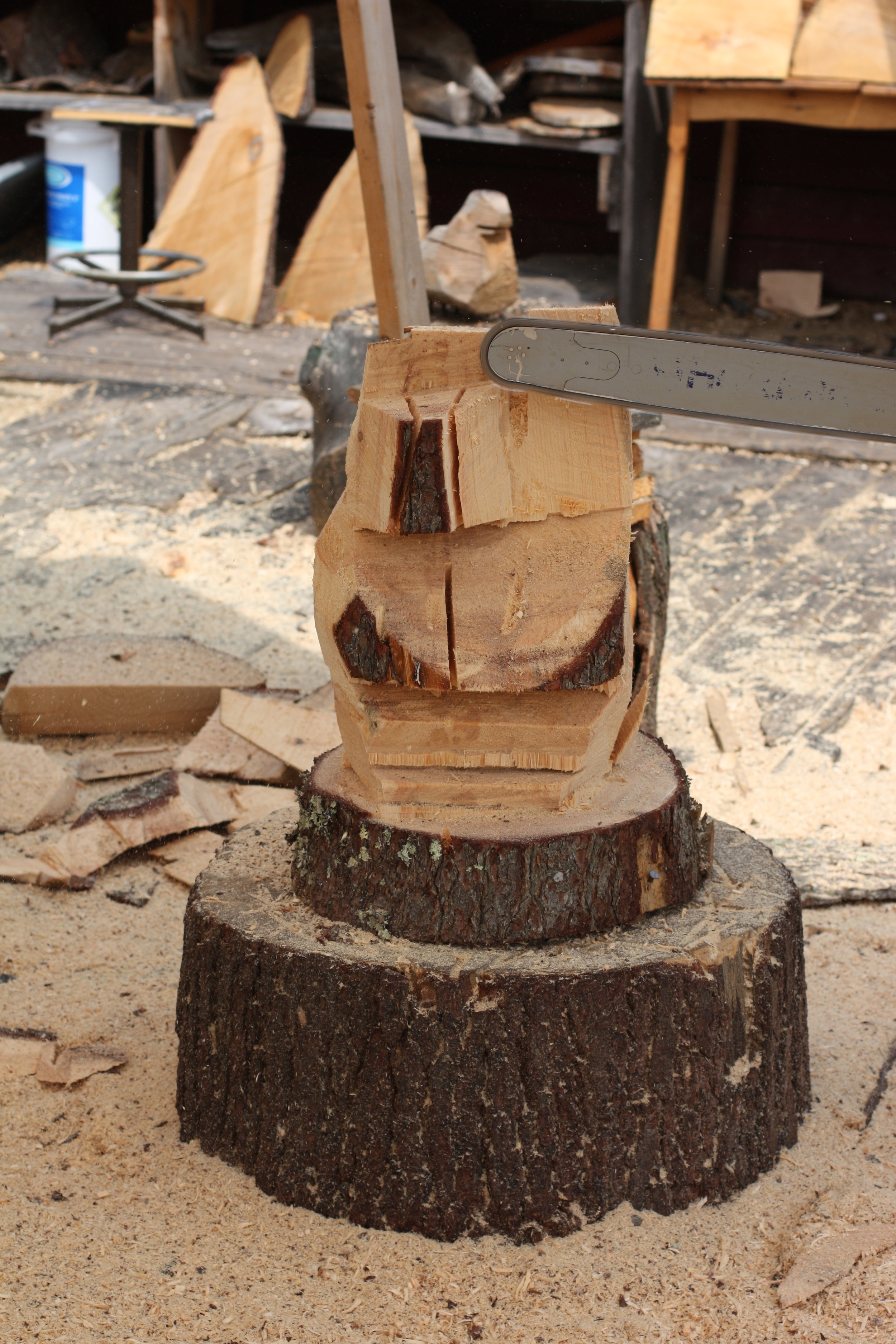
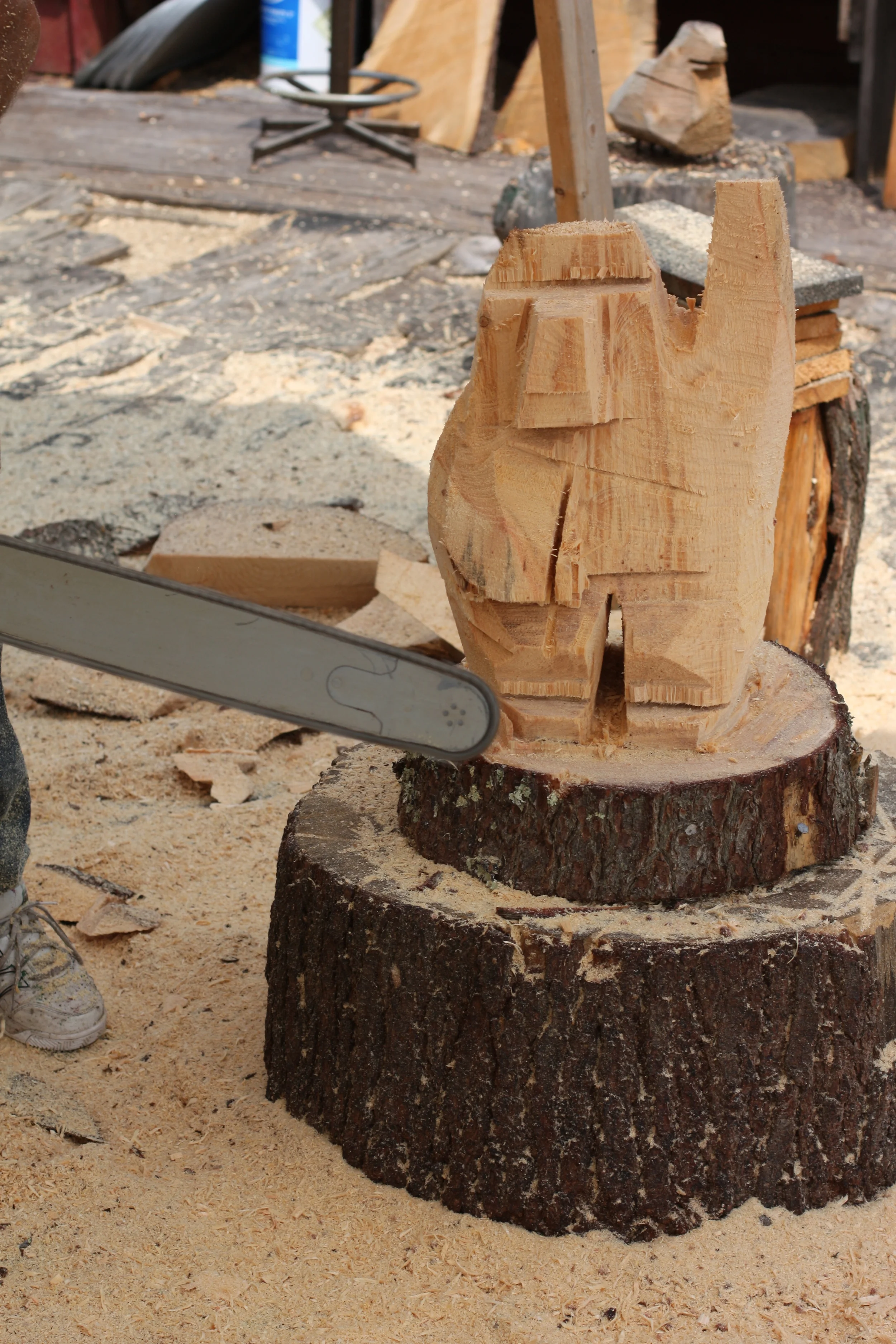
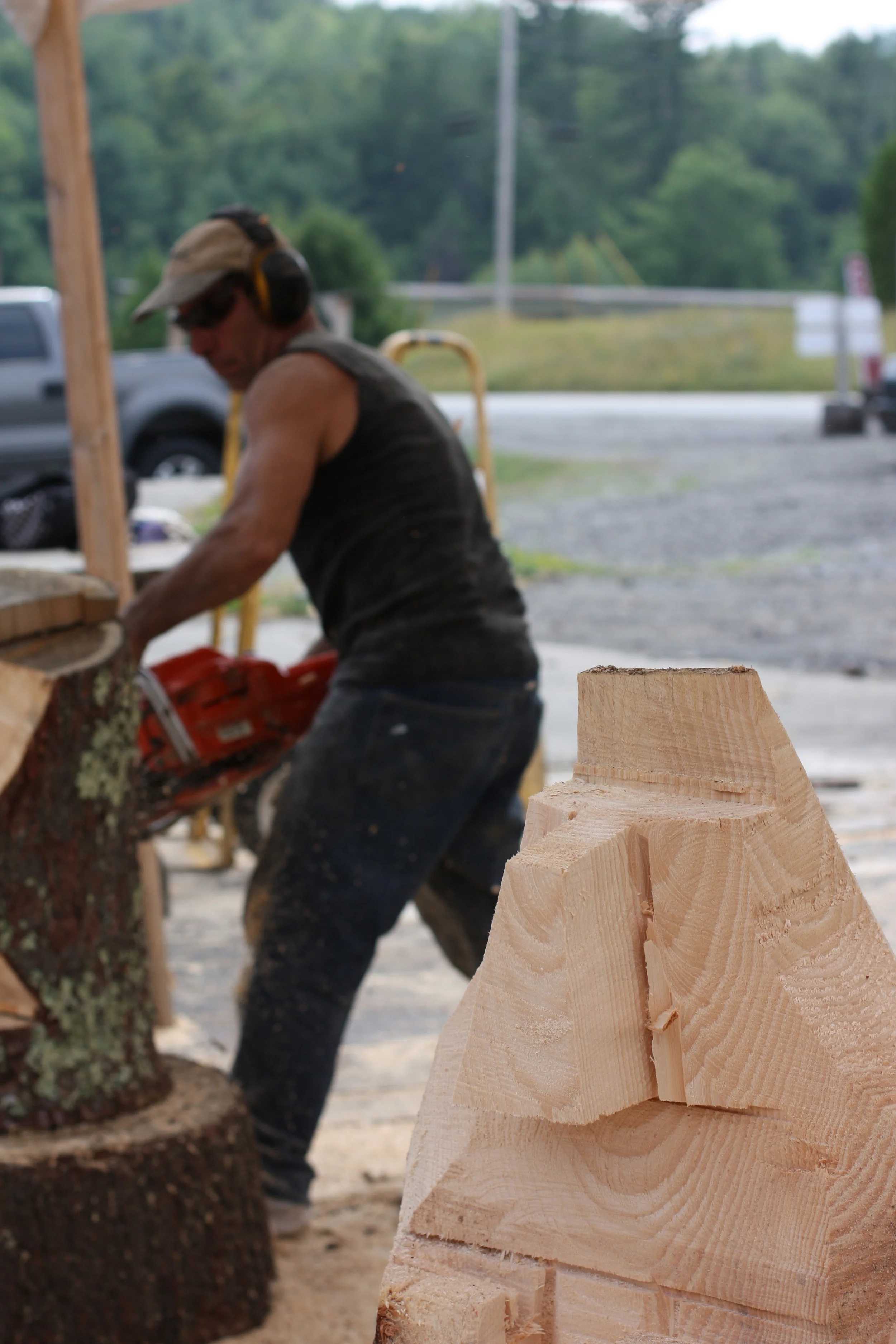
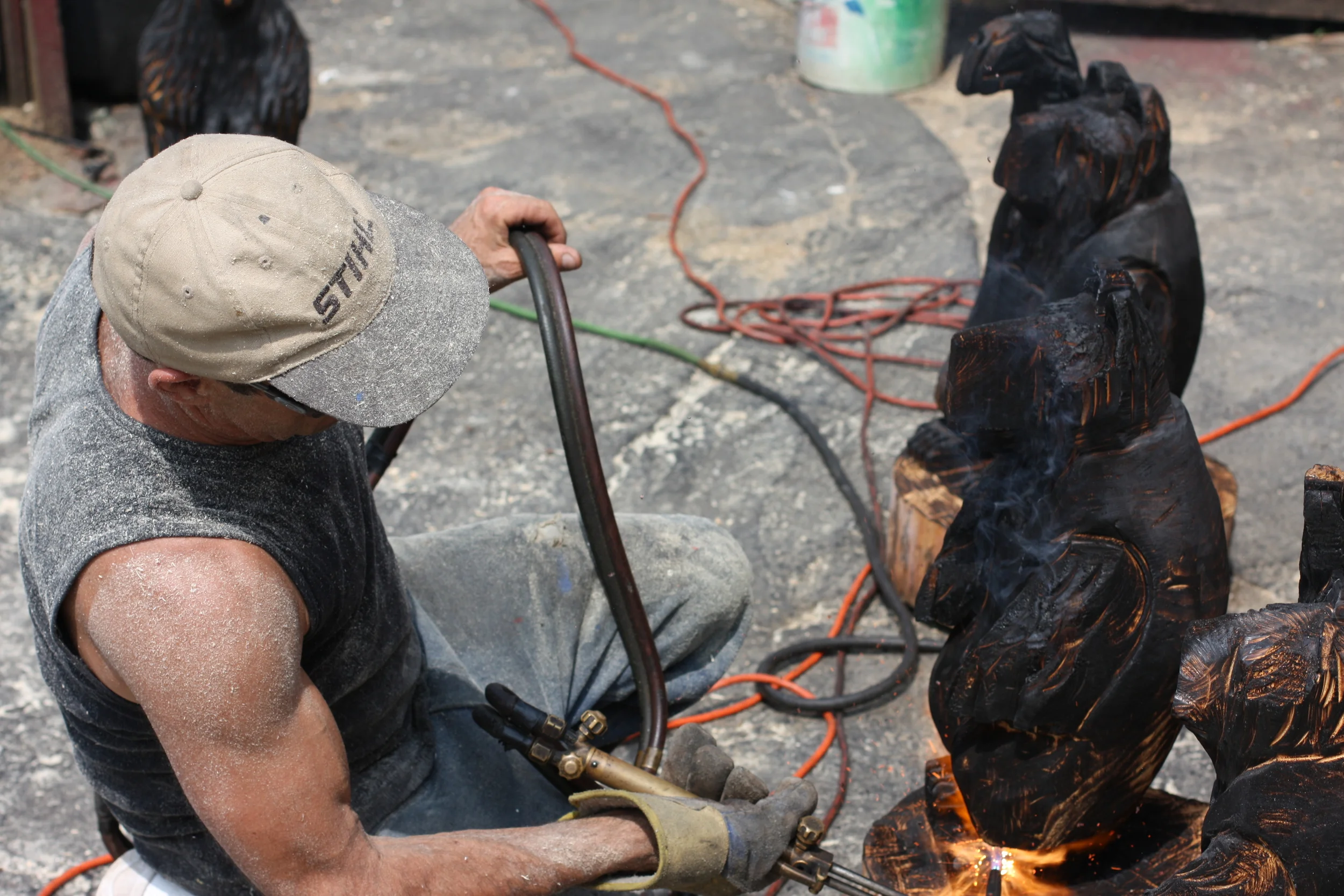
Photo Gallery shows Frank's Bears, Frank in action and his fine art pieces.

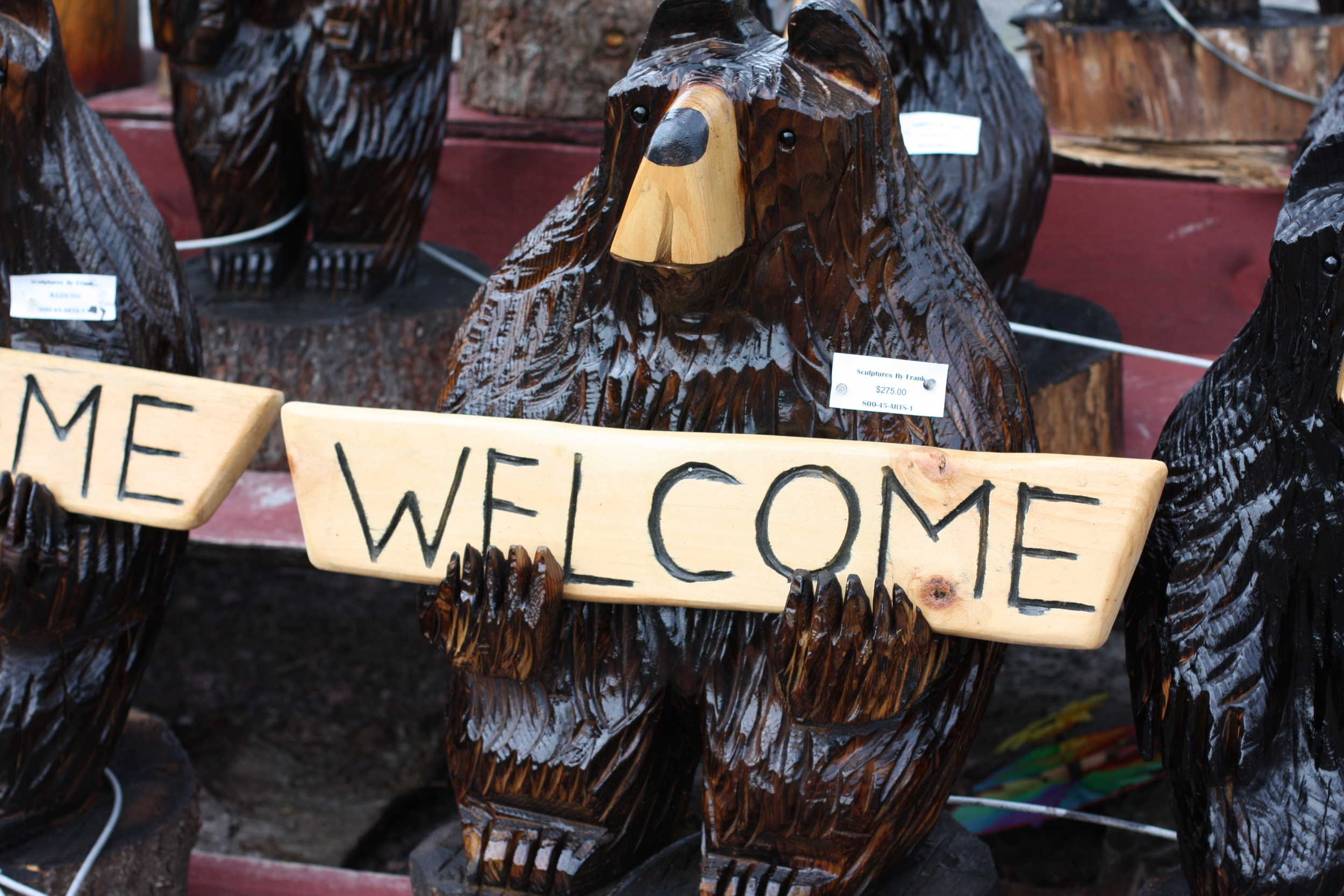
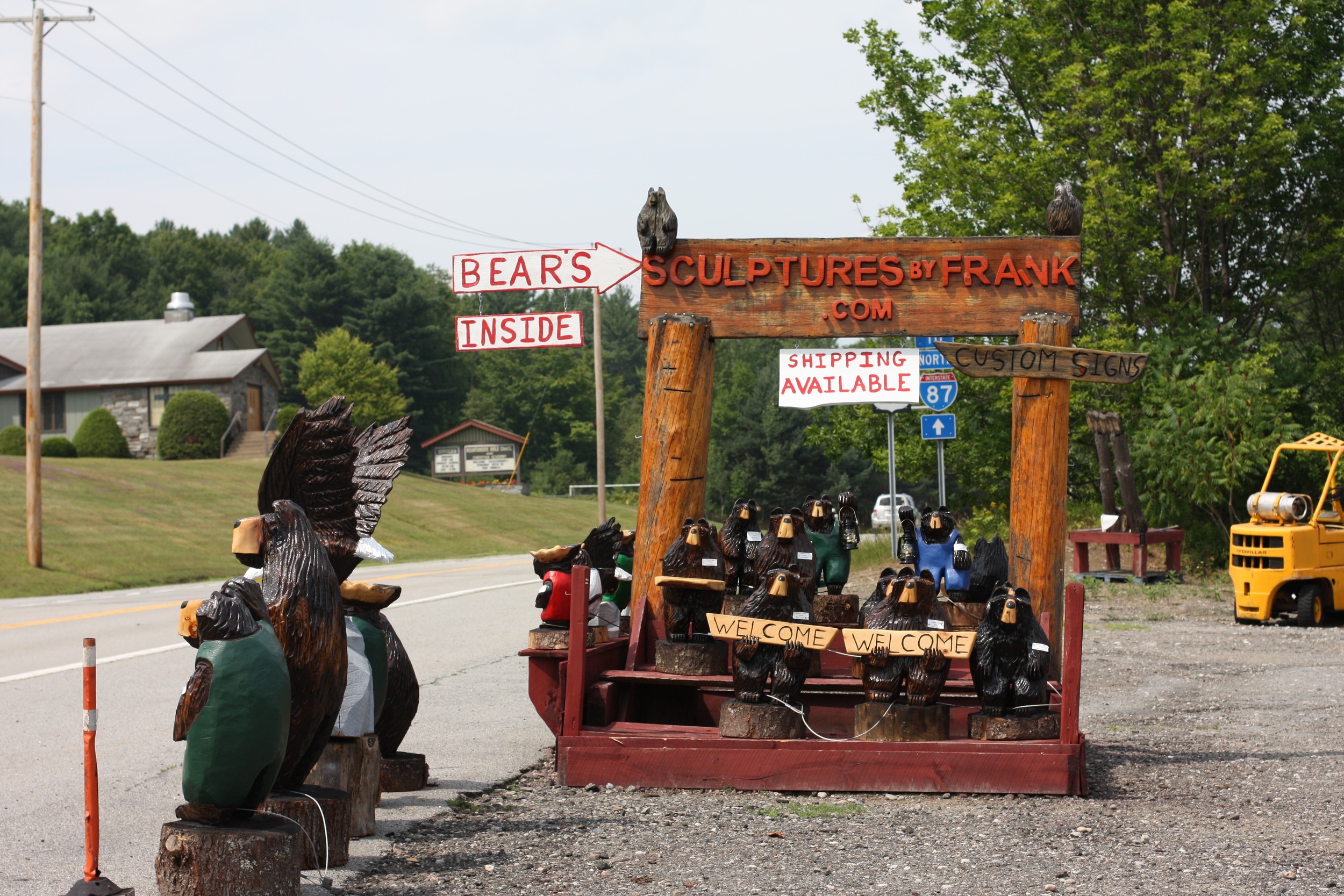
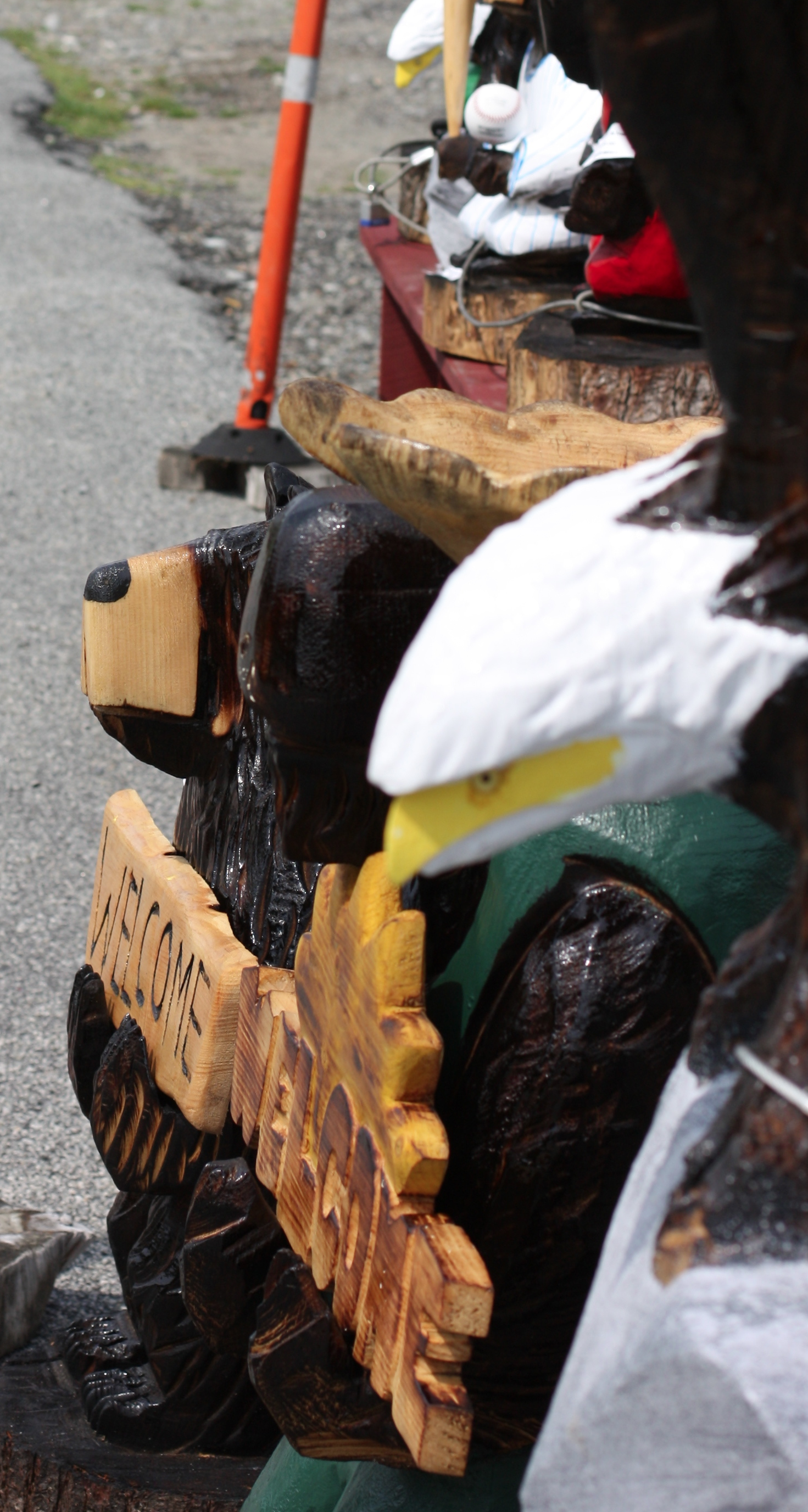
For many folks, being greeted by bears upon entering the outskirts of Schroon is either a sign you are home or on holiday.

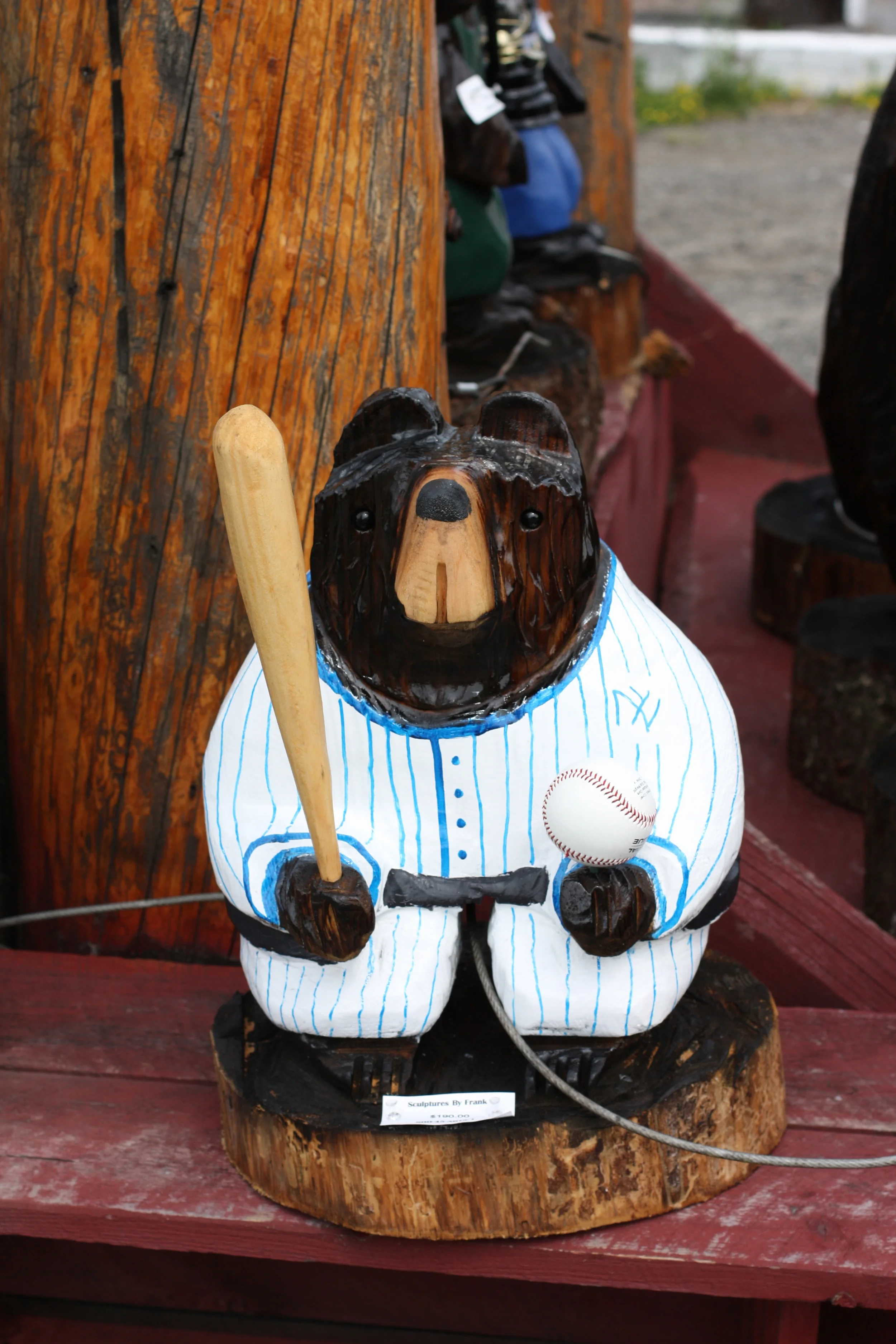
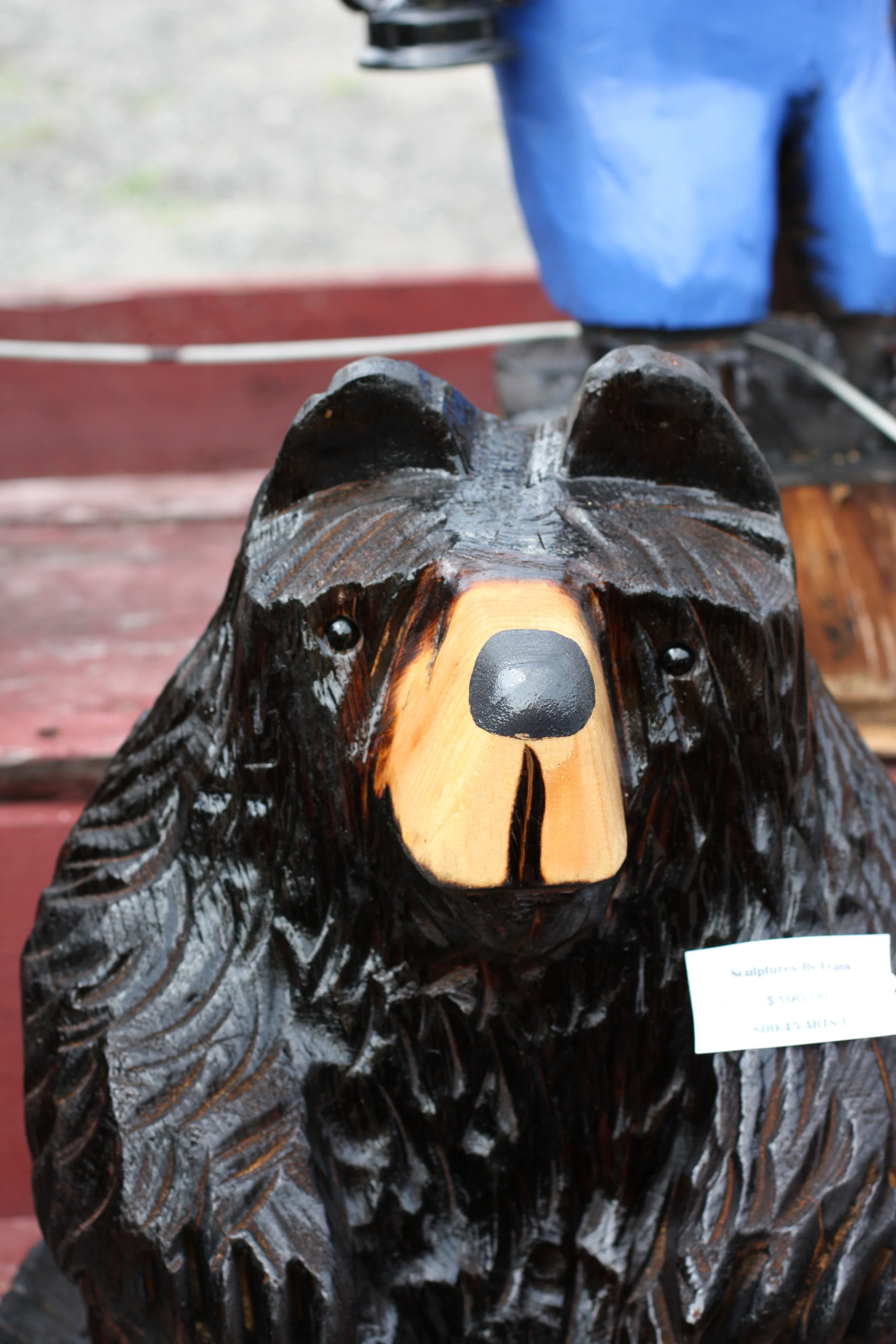
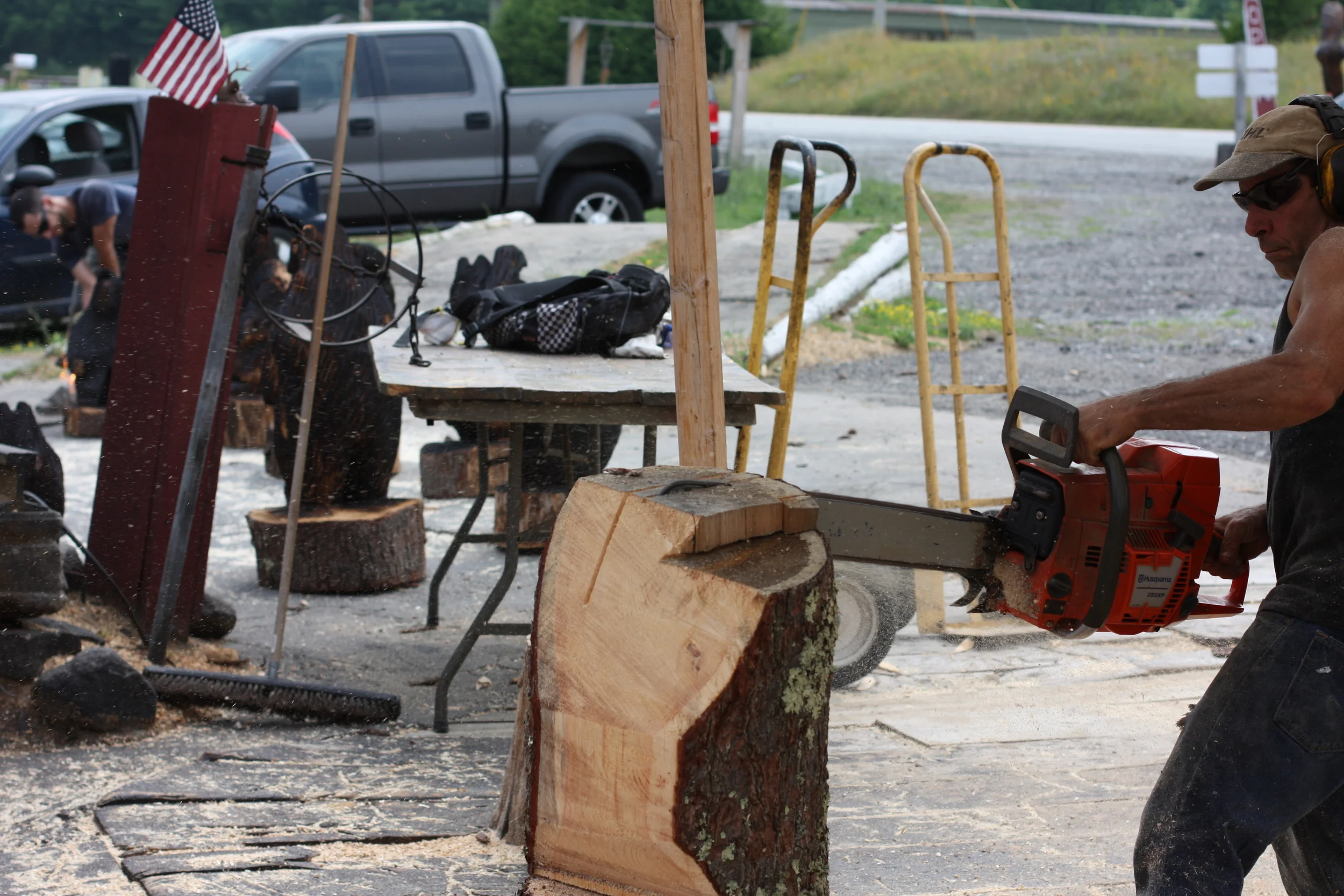
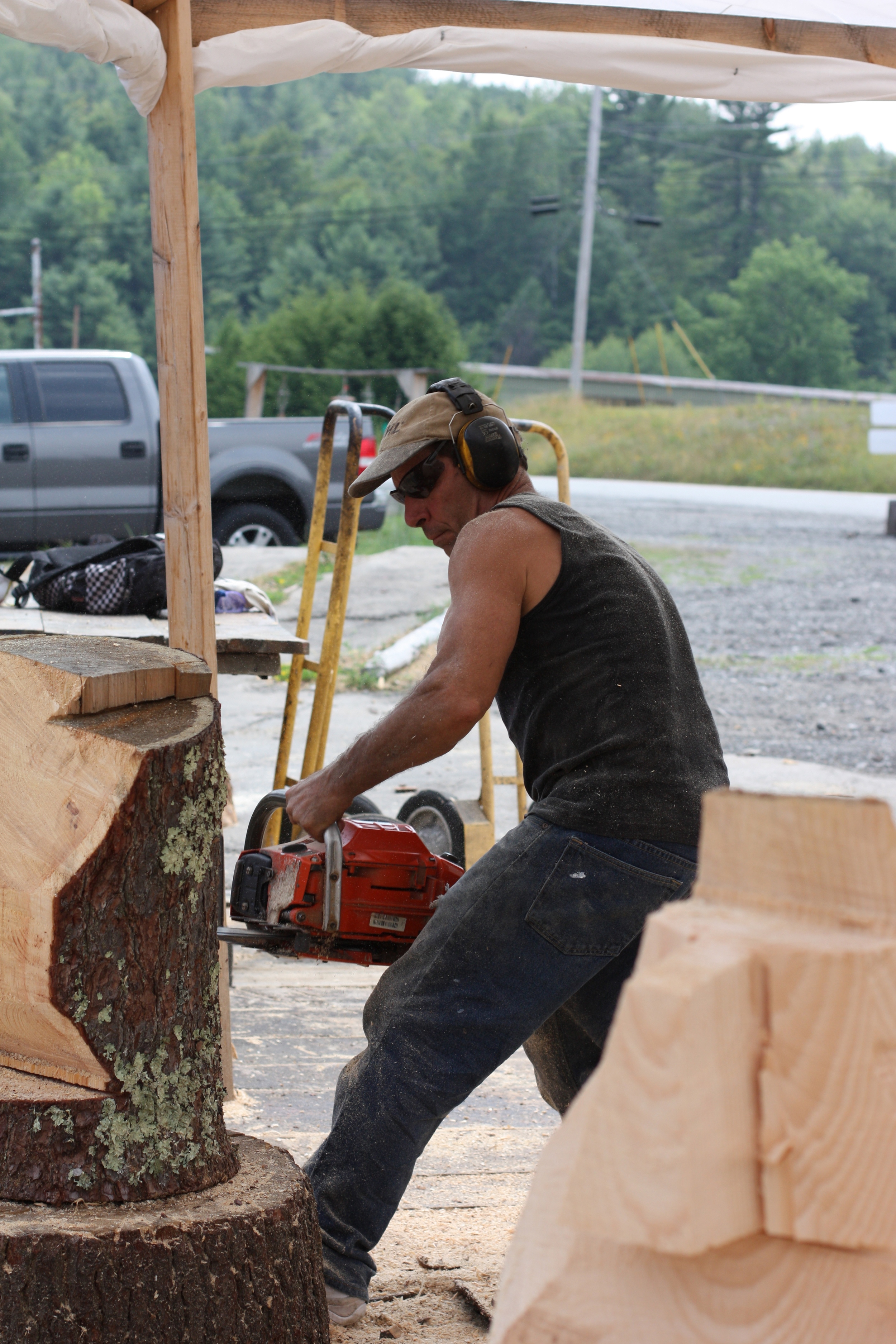
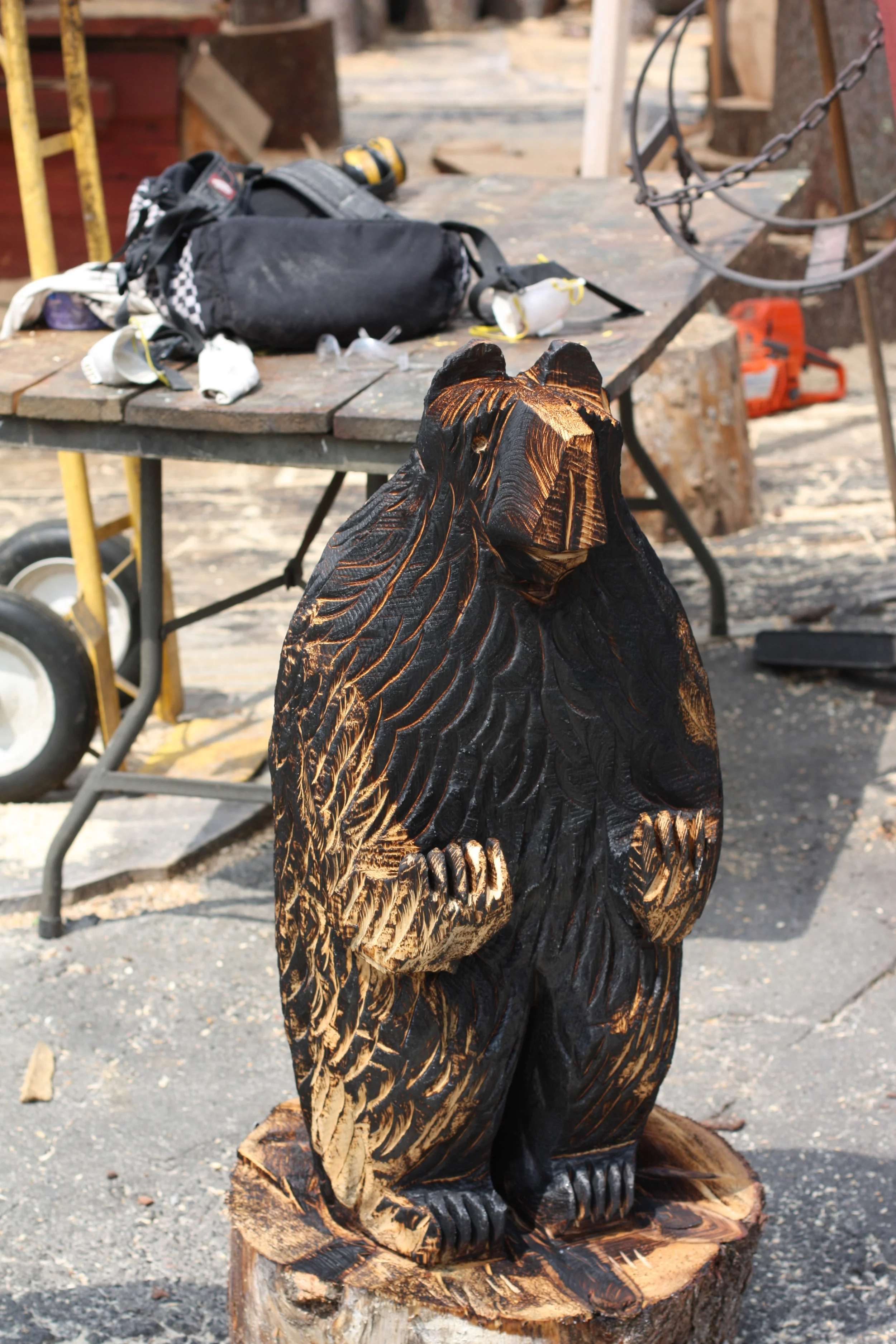
We are not talking about those wild beasts that roam the ADKs  -- and love to eat trash -- but the chain saw carved sculptures by Frank Cavoli.

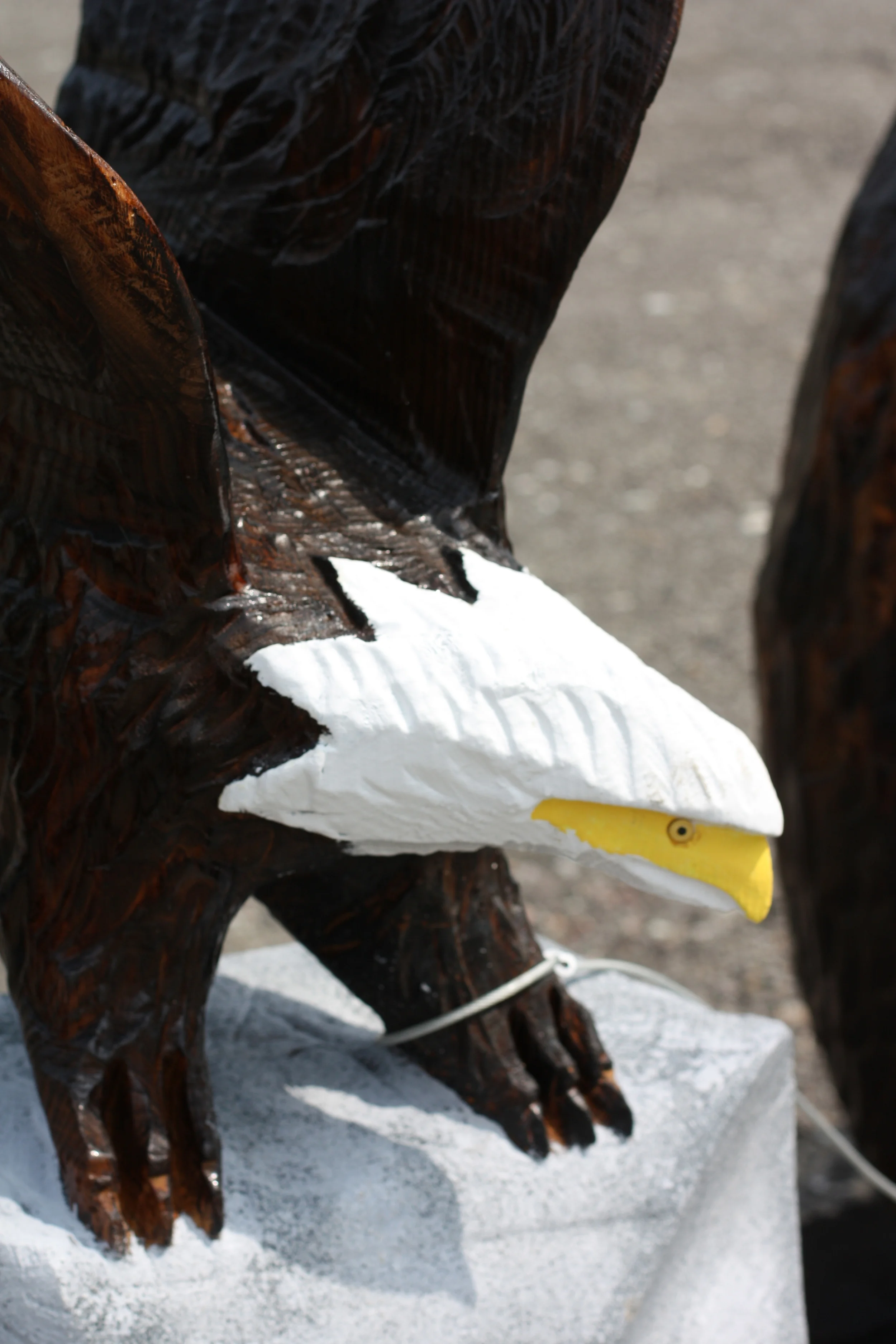
If it’s not the bears that catch the eyes of folks who have taken exit 27 off the Northway  -- and later make the left hand turn onto Route 9 --  then it’s the soaring eagles or moose that remind you you’re back in paradise.

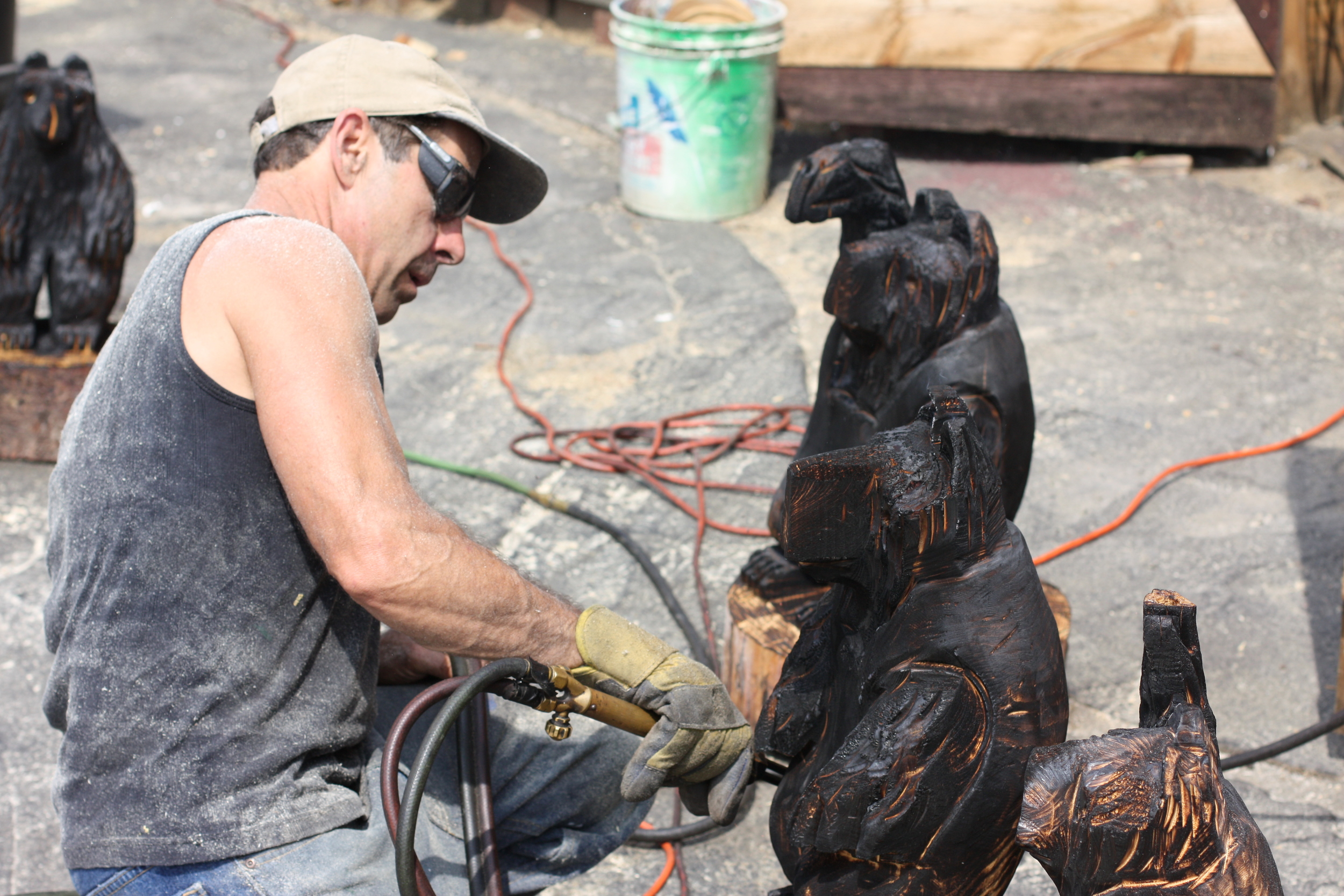
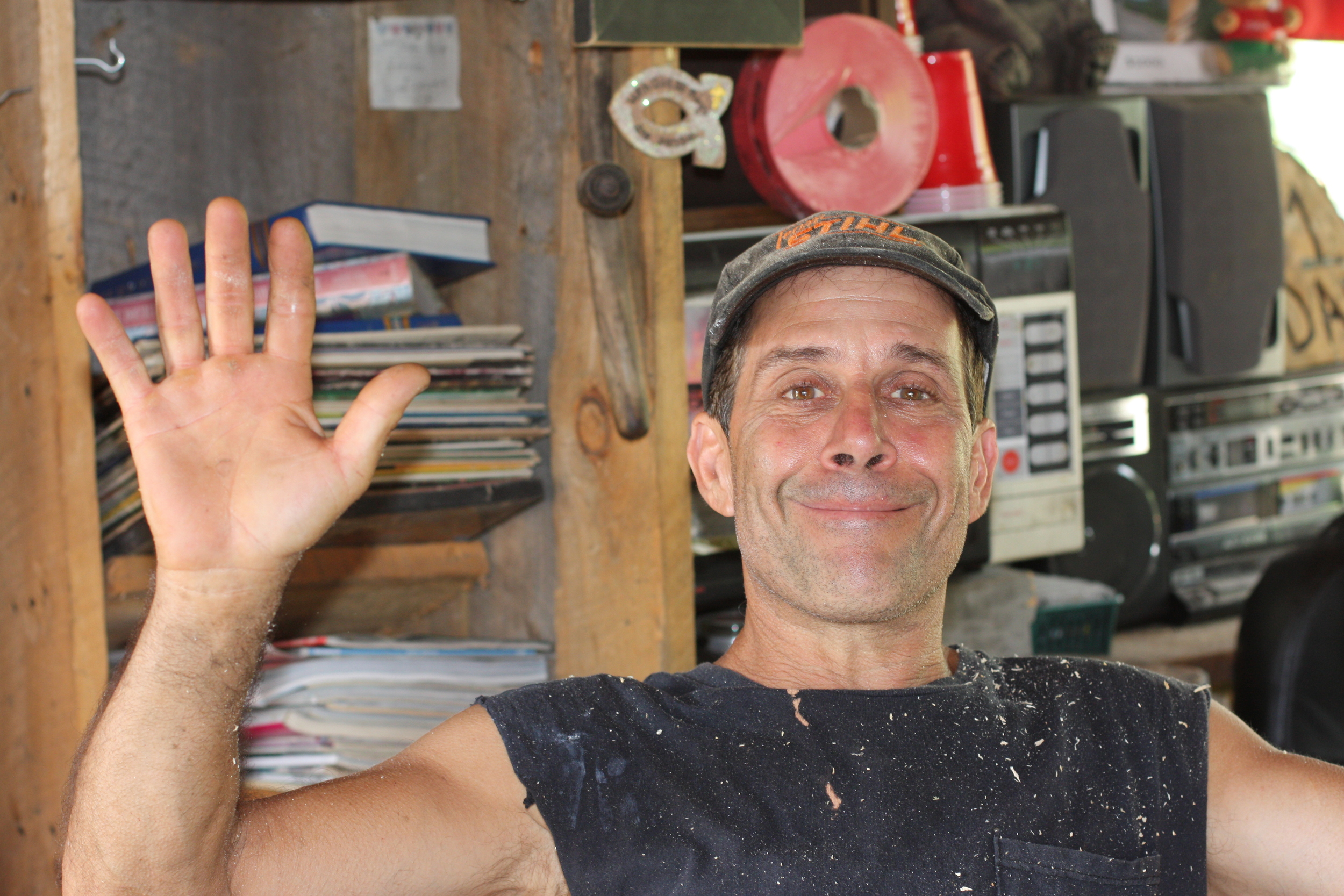
Frank has carved for almost two decades at his shop (next to the new Paradox Brewery) and it has been mostly bears.

So how many has he carved in his career? 

“At least 35,000,” Frank told Schroon Laker on a recent visit.

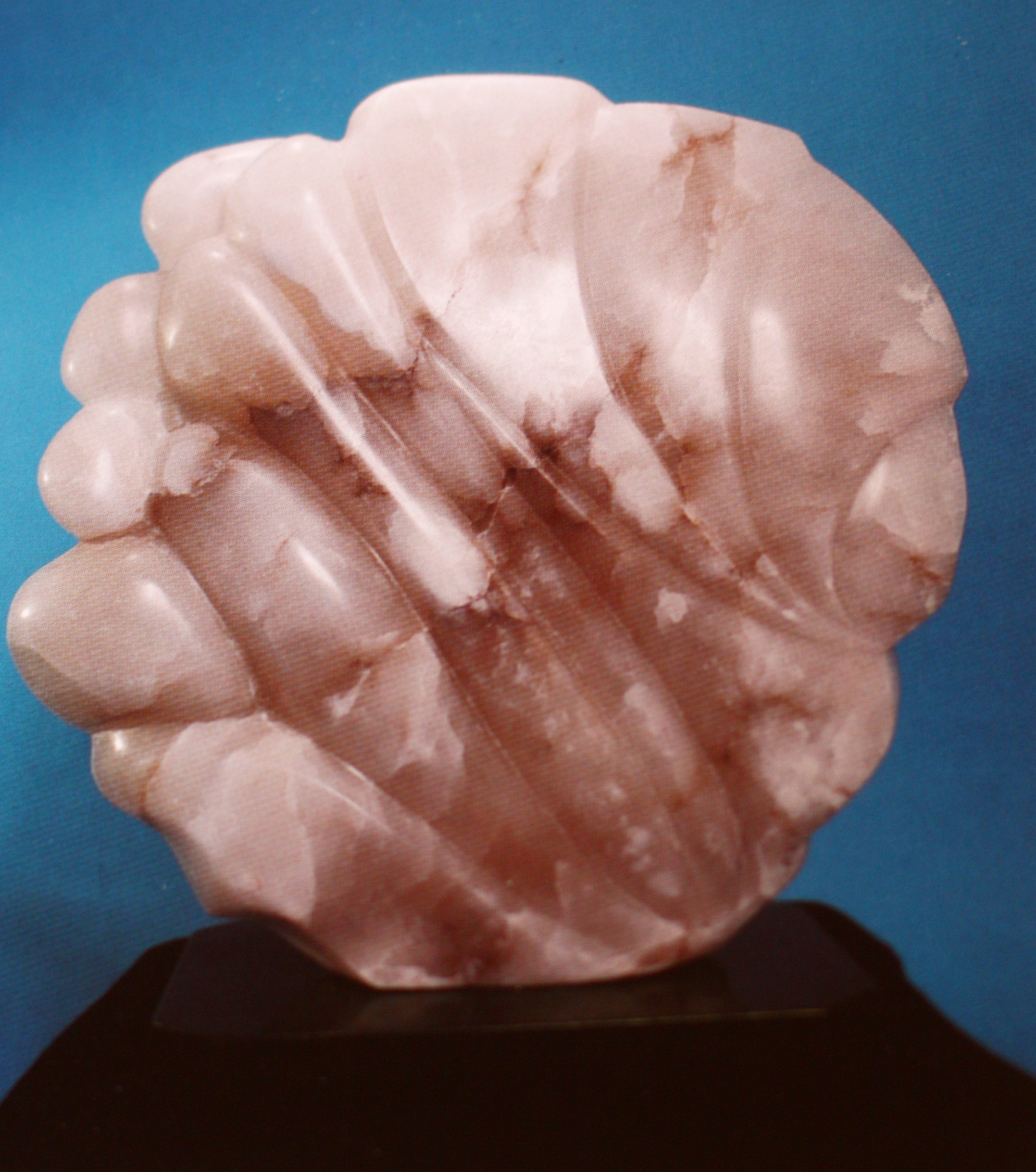
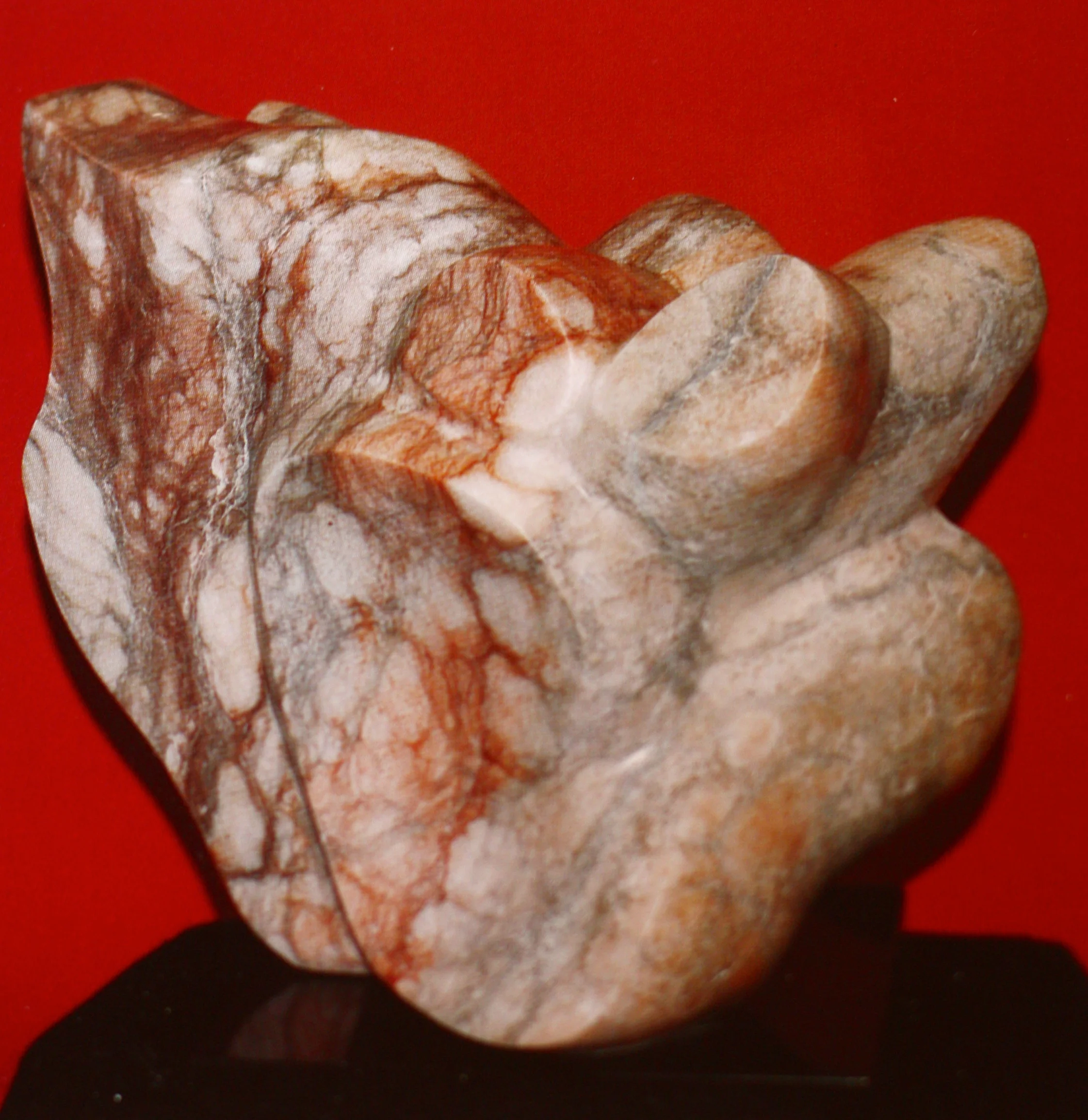
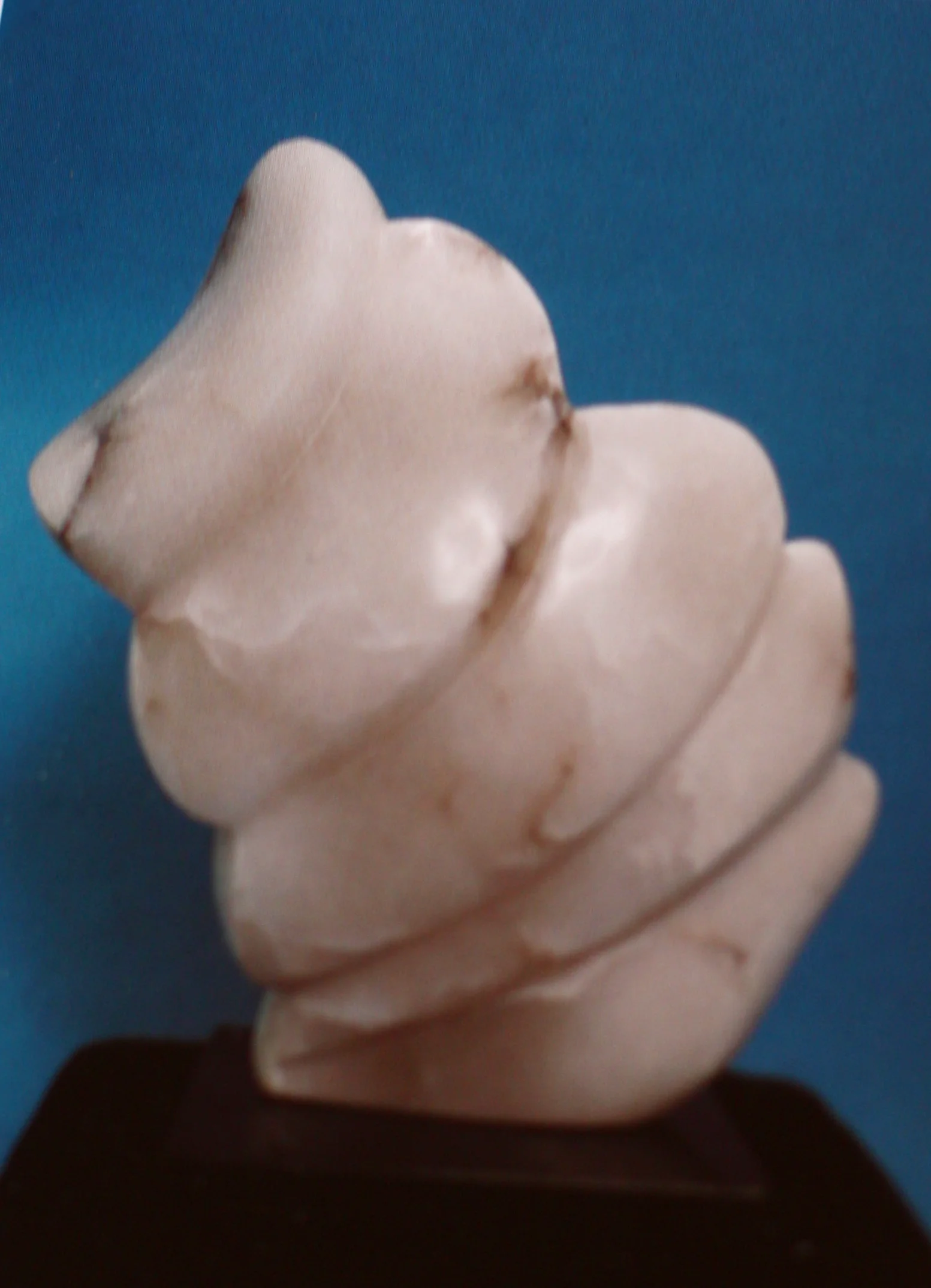
Frank, a fine arts sculptor, who started working with marble crafting abstract pieces, fell into the bear carving business by chance.

“I was raising my 6 month old son and restoring a 150 old Victorian in Schroon, which needed a lot of work.

“As time passed, I started carving with a Sawzall  (a reciprocating saw) doing fine art and in the abstract. A guy called up and said: “Make me a bear.” That’s basically it”.

The design of the bears took its current form over five years.  Frank works with pine, which is readily available, “easy to work with, and dries fast”.

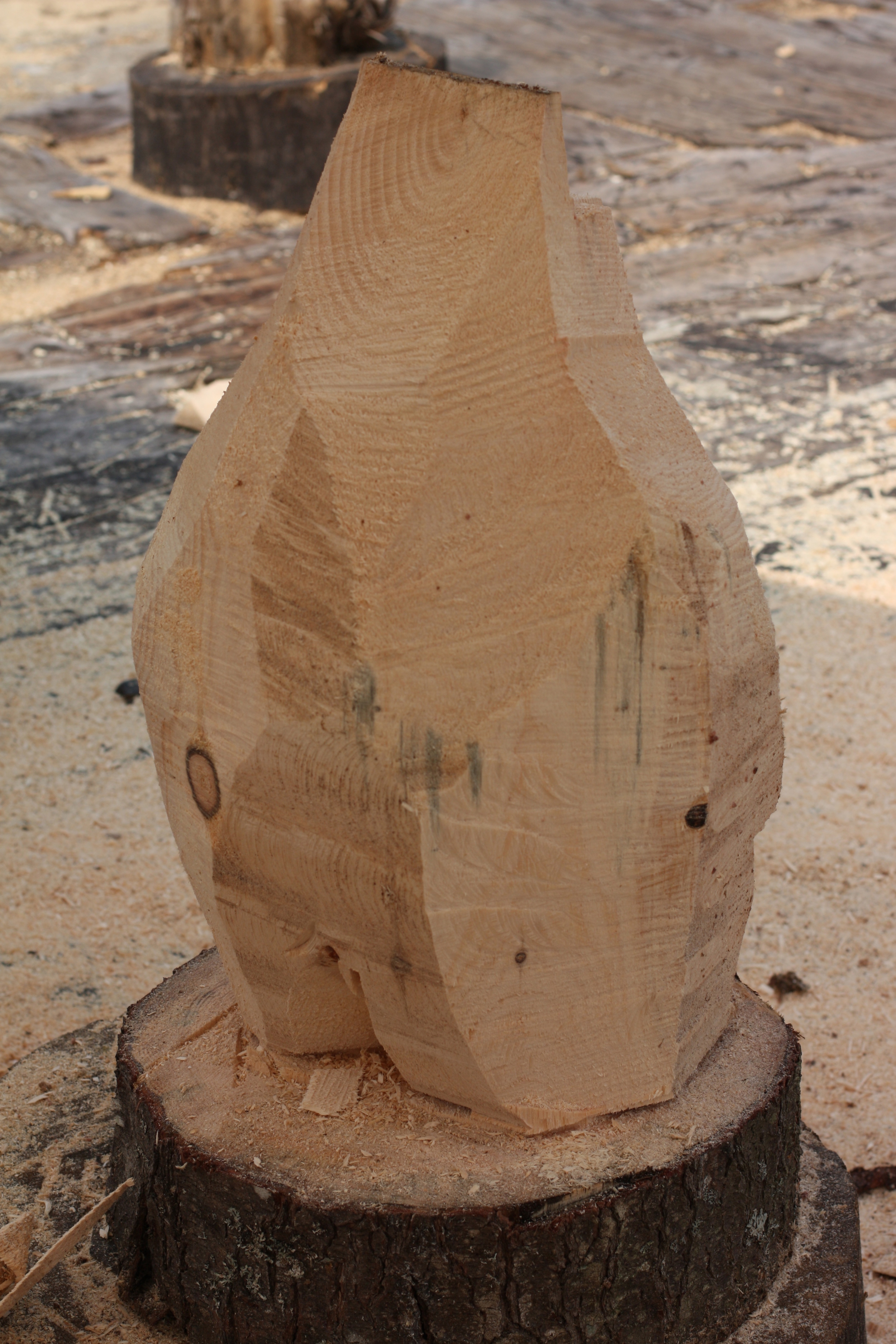
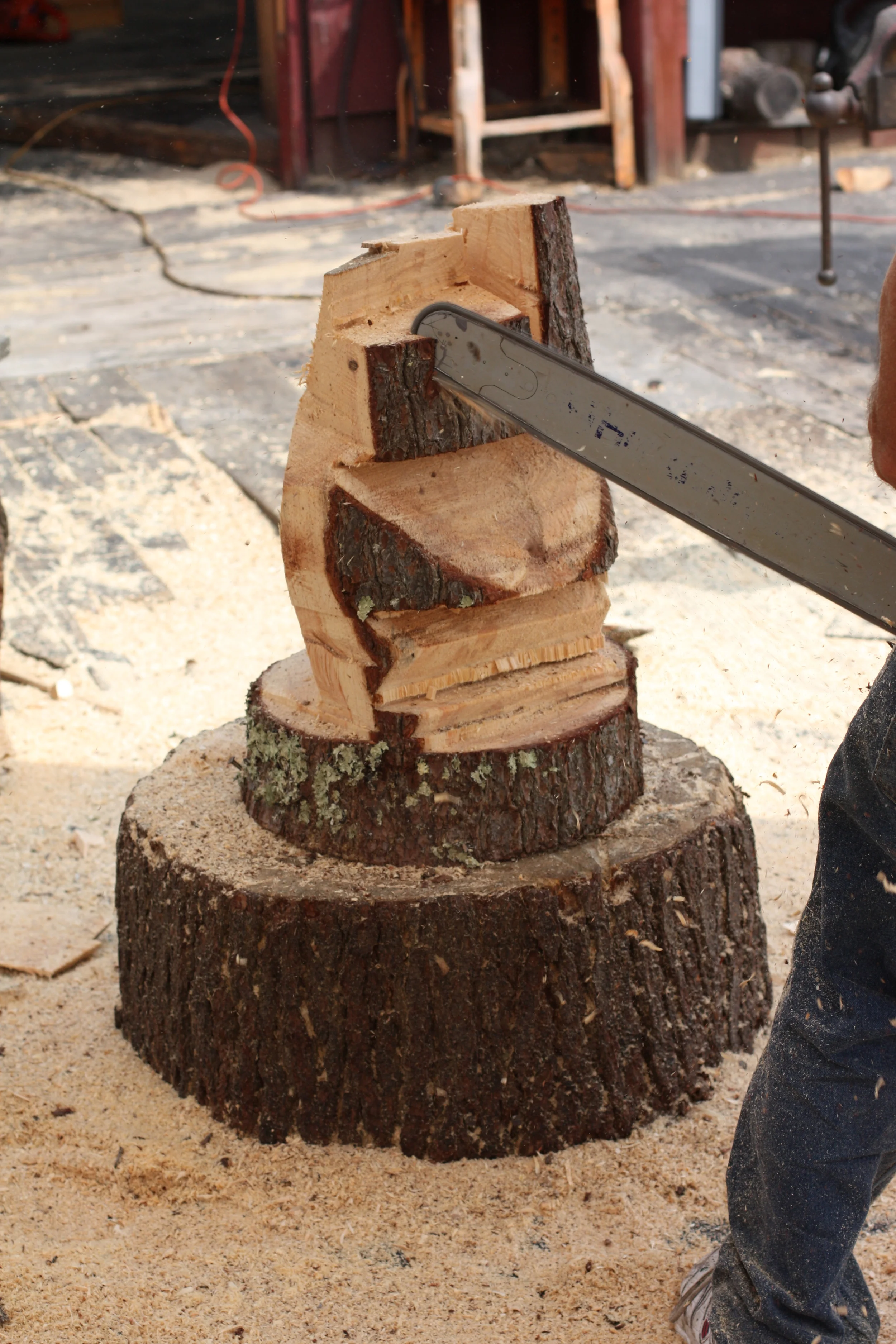
And fast also describes the speed at which Franks works. Lightening fast! From block to bear, it seems like it’s done in less than ten minutes!

The process then involves applying a flame to give the bears their unique color, before several coats of lacquer.

But it’s not his carved bears Frank is most proud of.  “I really do love the fine arts work. I’m really proud of a 20-foot tall bronze coated abstract on Redwing Road”.

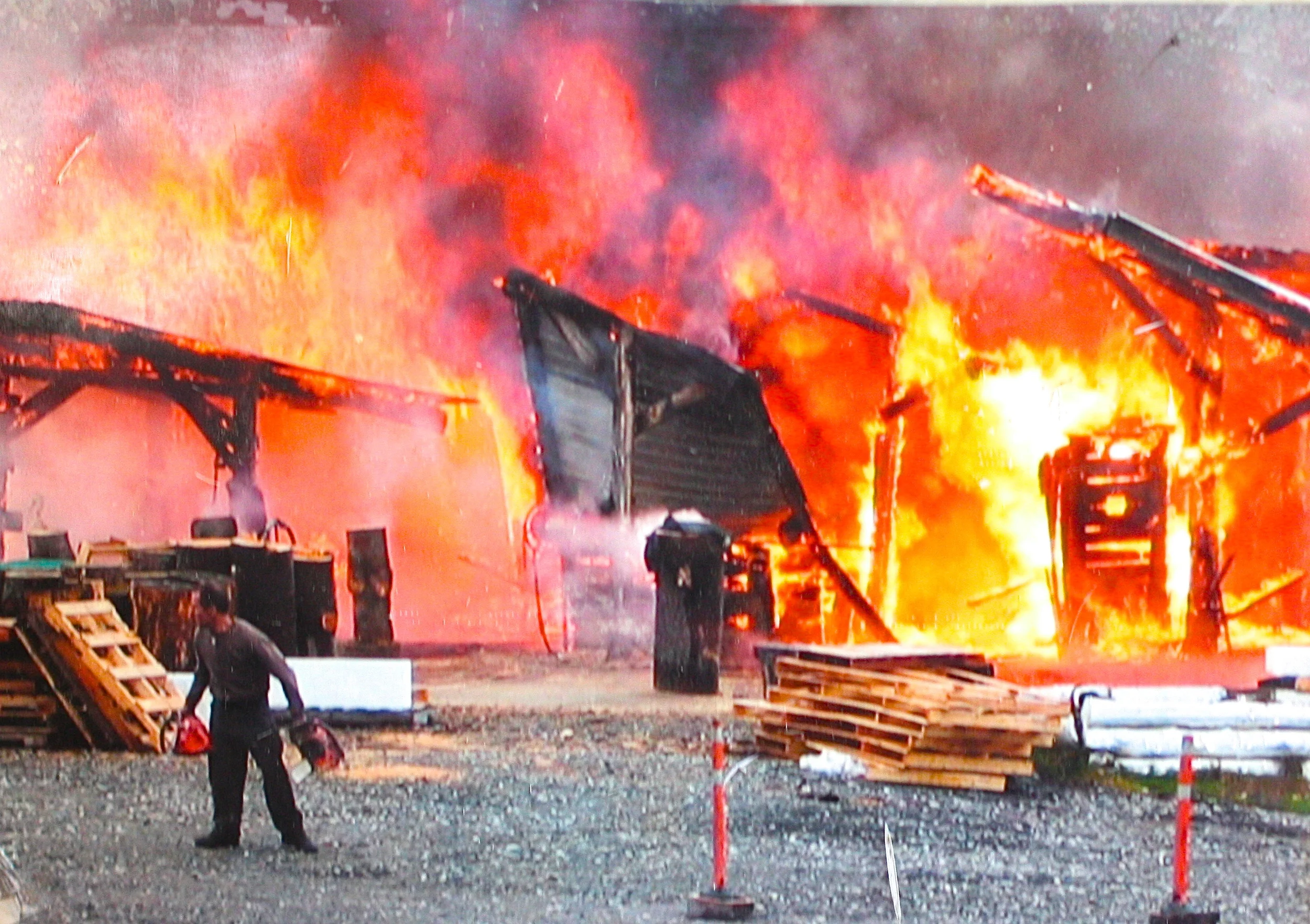
"He is most grateful for still being able to carve here in Schroon, after a fire reduced his business to rubble, more than 10 years ago.

He had just returned from wintering in Florida and was re-opening his shop on a chilly spring day.

“It was brutal, absolutely brutal,” Frank recalled, while looking at a photo on the wall of him running from an intense red fireball.

While he doesn’t know for sure what happened, he believes a spark from his furnace started the blaze.

“The fire was so hot it was singing my hair. It took 4 years to get back on my feet to rebuild the shop and expand it.

A business, one day he hopes that his son, Frank Jnr, also a wood carver, will manage.

“He’s learned by working beside me in the shop. When he was ten, he got his own saw, revved it up and started carving critters.

“He also does amazing abstract work. He has passion. When he first started, it was like he had been professionally trained in art school.”

"He’s now embraced the business, and is working to grow it.”

These days, it’s not just critters that are keeping the father and son team busy.

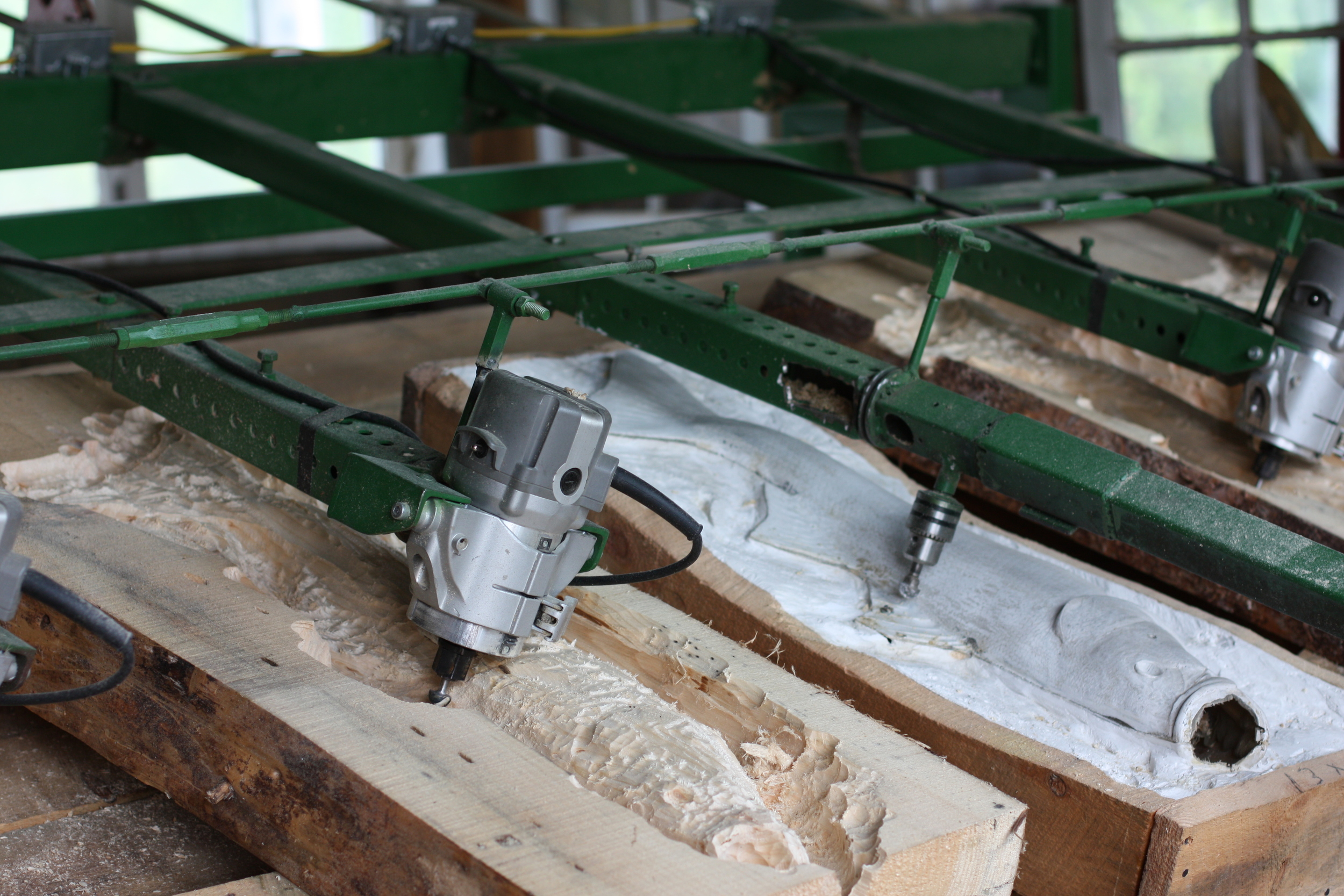
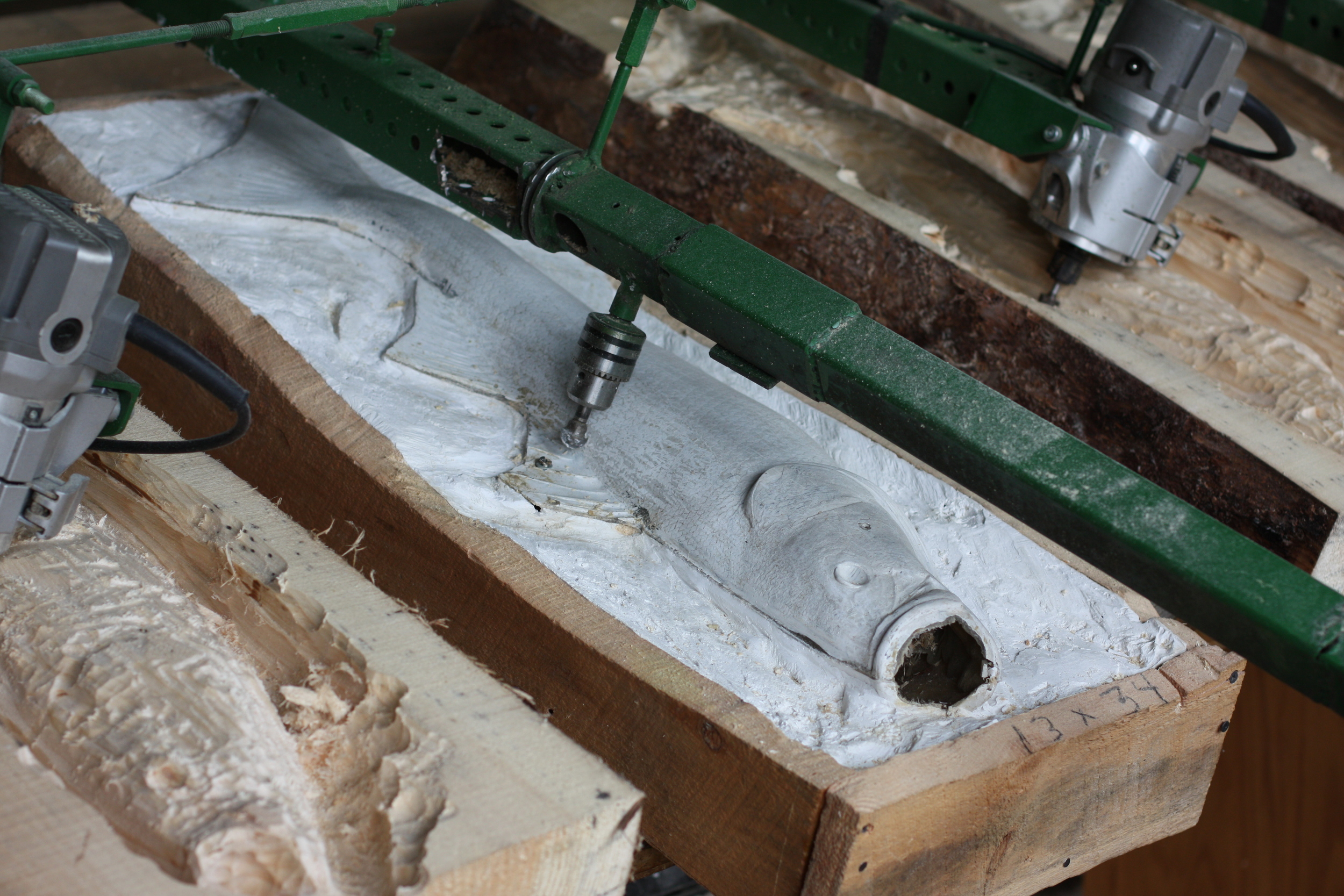
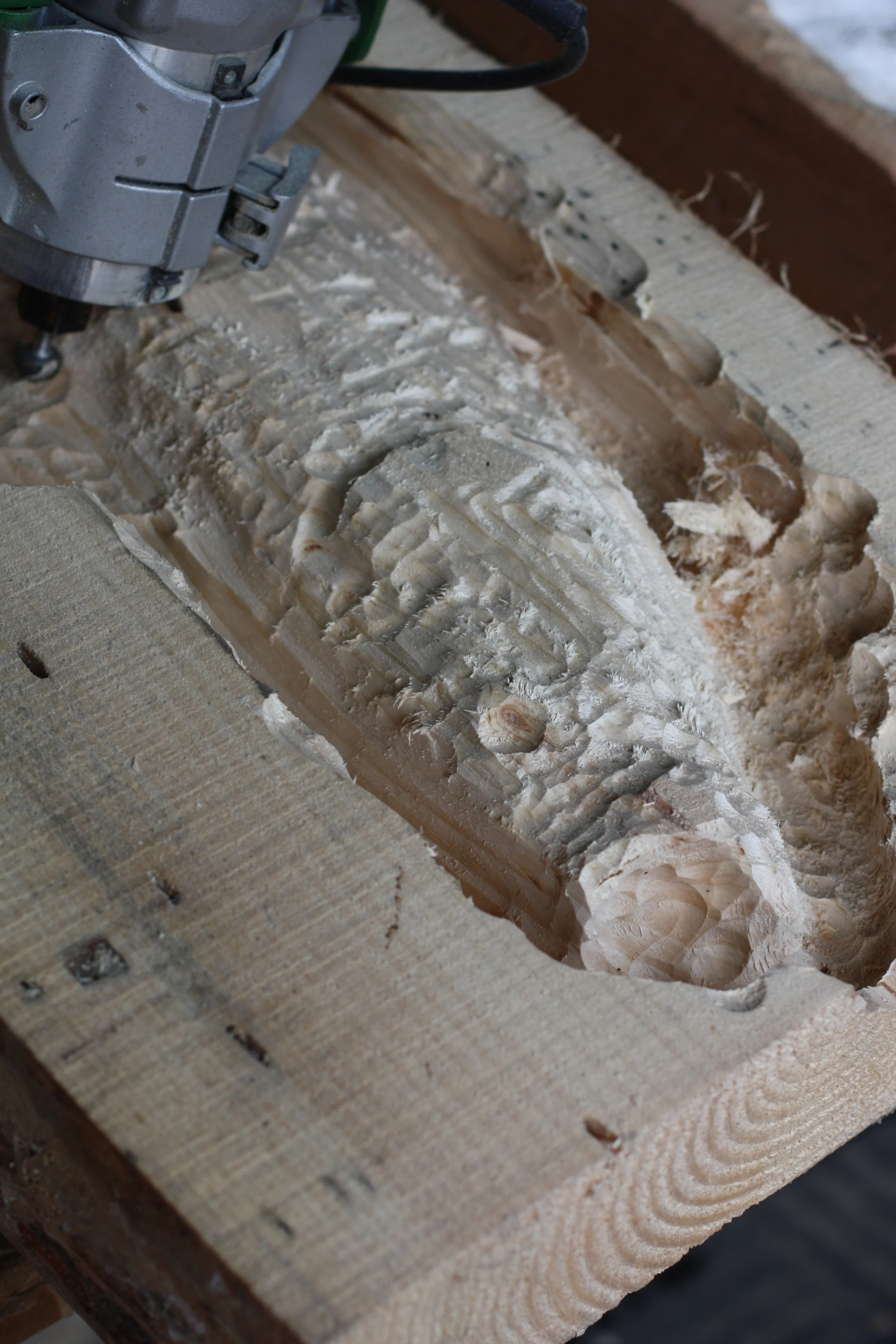
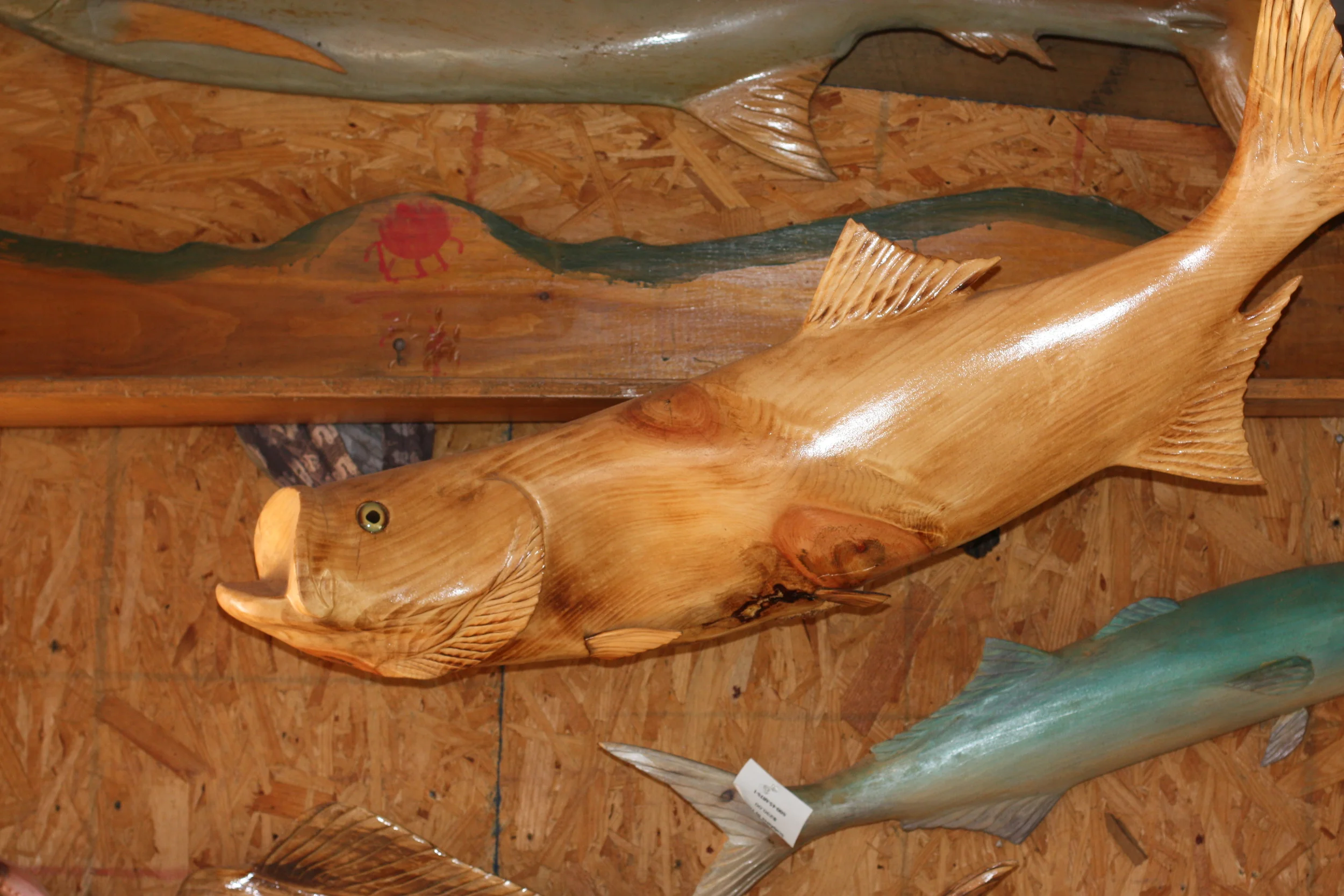
For the past 18 months Frank has been using a duplicating machine to carve a variety of smaller pieces, mostly fish and aquatic life.

“I was inspired by seeing it on TV, and my buddy Jim and I built together. This machine is pure simplicity, compared to other machines on the market.

In the future, Frank would like to concentrate more on the fine art side of his business and eventually like to teach youngsters his craft.

“I’d love to be able to apply for grants and turn this into a school,” he said, smiling, before revving the saw and attacking another block of pine!


Rocking The Depths Of Schroon In Search Of Guitar Magic

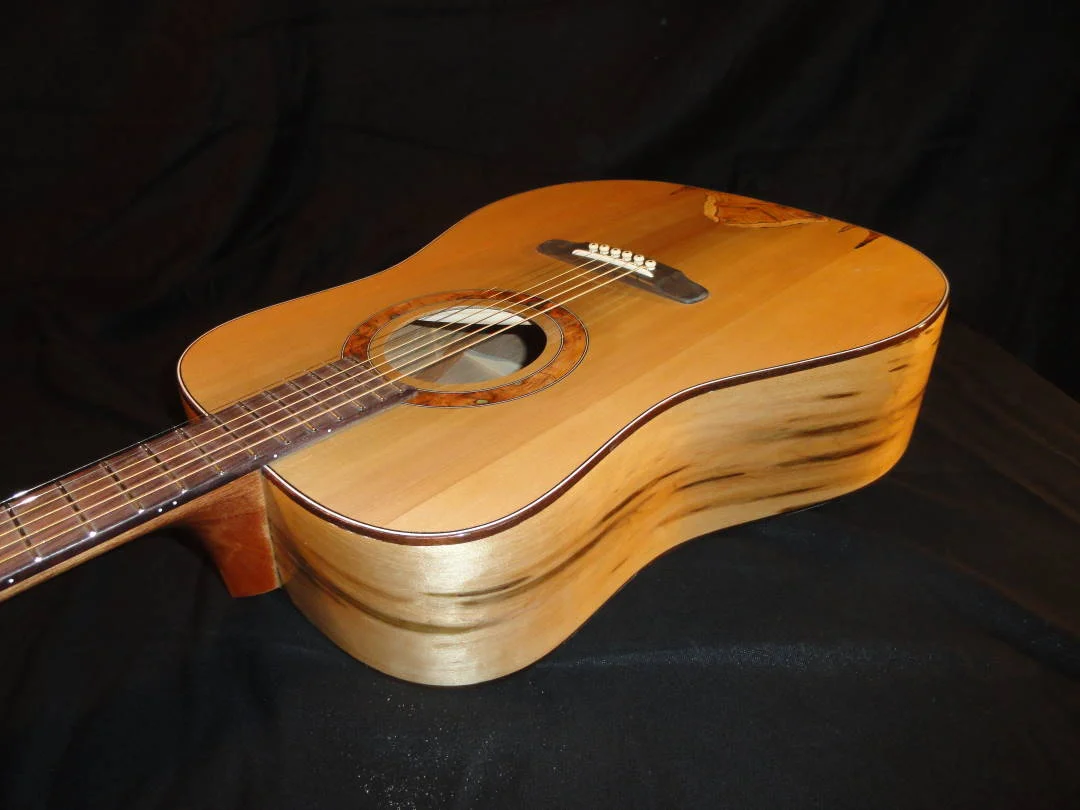
One of Eric Bright's Handmade masterpieces 

One of Eric Bright's Handmade masterpieces 

What’s so unique about Eric’s Bass Rock Guitars is that much of the wood used in their production comes from Adirondack Spruce logs sourced from the silt covered bed of our very own Schroon Lake.

From the PostStar:

Bright, with the help of his daughter Kate, began using masks and snorkels to search the bottom of the lake for more sinker spruce logs.
“I go down and wave my arms around on the bottom of the lake,” Bright said.
Bright and his daughter look for milfoil as part of the Schroon Lake Invasive Species Prevention Program while they’re searching for logs.
Many of the logs at the bottom of the lake are beneath a layer of silt and about 12 feet of water.
The silt creates a sealed layer of protection for the log and a suction that makes it difficult for Bright and his daughter to bring the logs to the surface.
“I pull a rope around the bottom of the logs so we can drag them back to the shallows in front of the house,” Bright said. “Then I usually cut them into two 6-foot-long halves and drag them up with a rope and tractor.”

The end result are some of the most beautiful guitars you will ever see. Folks we’ve spoken to, who have played, them call the experience “joyous.”

You can catch Eric playing all over Schroon, from Witherbees Open Mic nights, to the Acoustic Band Jam at the Boathouse each Monday night, sponsored by the Schroon lake Arts Council.

Check out Eric’s Face Book page for more photos and information.