The Life, Love And Letters of Mate Locke Cheney

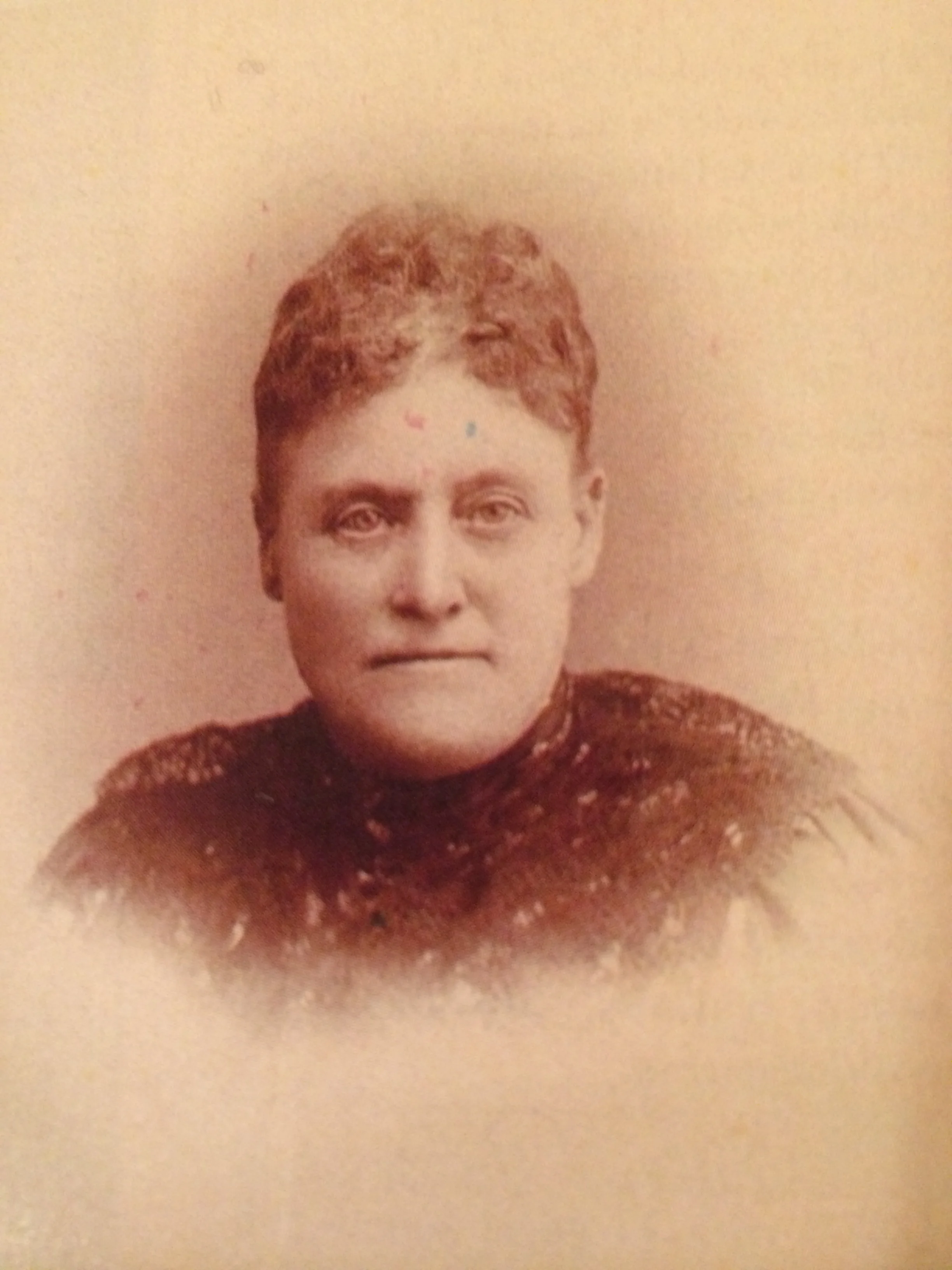
Photo: Courtesy Ann Breen Metcalfe

Photo: Courtesy Ann Breen Metcalfe

For a slice of what life was like in Schroon in the mid-1880s, we urge you to read the wonderfully written dispatch Schroon Laker Ann Breen Metcalfe has filed for the latest issue of Adirondack Life Magazine.

The story, in the February issue, is about Ann’s great-grandmother, Mate Locke Cheney. You can find it in the Yesteryears section on page 63.

Mate and her husband James Cheney lived on Leland Avenue. Ann tells us he was part owner and captain of the steamboat Effingham and also worked at the Millbrook Stock Farm (across Route. 9 from where the Marina is now). Ann’s story is based on their letters written in 1885.

Ann’s writing is as colorful as always.

“Whether Mate married up, down or sideways when she became Mrs. James Cheney in 1859 is hard to know,” writes Ann.

Maybe she gets her style from her great Grand Ma. Mate writes in a letter about her reluctance to ride the very steamboat captained by her husband:

“I will shoot the very next person who asks me to ride on the lake.”

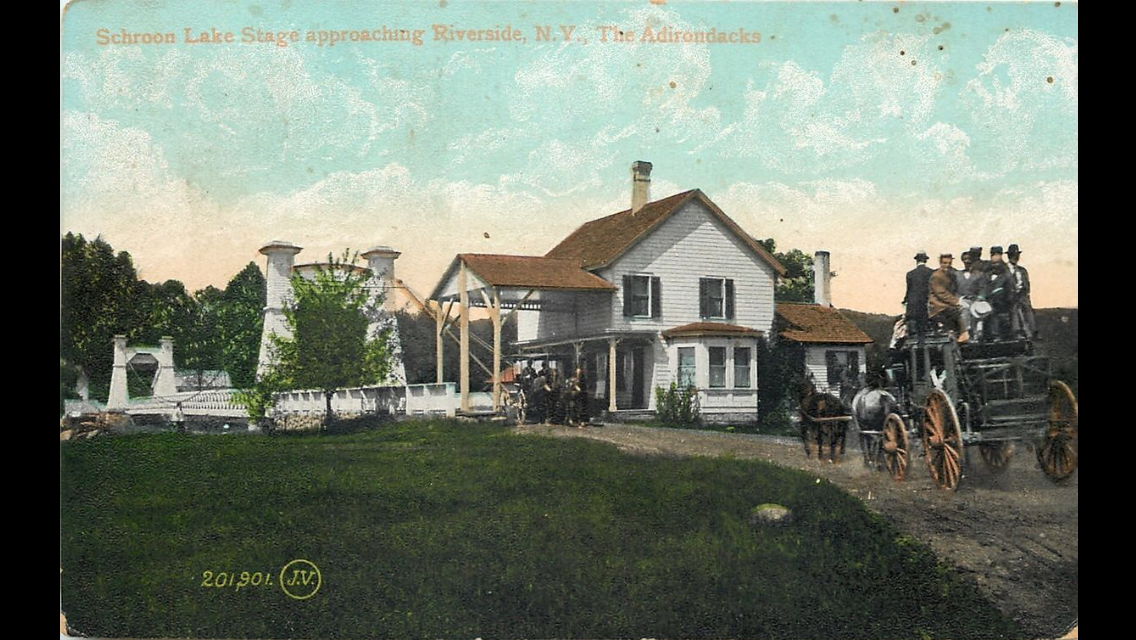
A stagecoach would transport tourists between Riverside (today's Riparious) and Schroon Lake to the Effingham

A stagecoach would transport tourists between Riverside (today's Riparious) and Schroon Lake to the Effingham

Besides delving into love and life on Schroon Lake, Ann gives an overview of the import of steamboats in Schroon for both transporting tourists and their value to the logging industry.

So whatever happened to the Effingham and the other Schroon steamer, the Evelyn,? This has been something of a passion of ours.

Ann confirmed to us what we already knew, saying they were “scuttled”.

Loris Clark from the Schroon-North Hudson Historical Society filled in a few more details – and some commentary.

“They were burned. How sad is that but (there was) no use for them and they were big...and in the way I assume what could one do with them?,” Loris wrote to us.

You can read about our previous attempts to find out what happened to the Effingham and Evelyn in our stories on great steamers here.


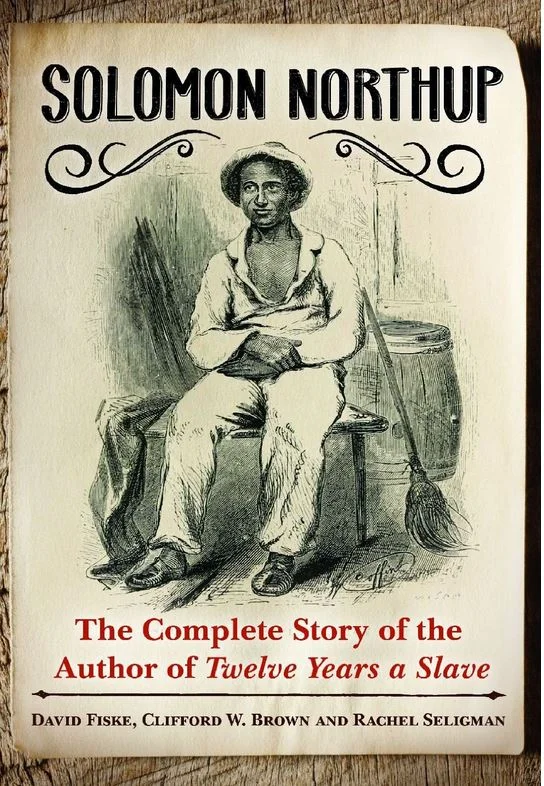
Twelve Years A Slave: Solomon Northup of Minerva

Capturesol.JPG

You can buy the book from Amazon by clicking here

By David Fiske  

(This story was first published in the Adirondack Almanack and is reprinted with permission of the author and the Almanack). 

Minerva, primitive and remote in the early 1800s, hardly would have seemed a likely birthplace for a man who would write a book which would attract national attention, make the author a household name, and, to some degree, help start a civil war. But indeed, it was there that Solomon Northup, author of Twelve Years A Slave, was born.

Technically the town of Minerva did not exist at the time of Solomon’s birth on July 10, 1807 (though his book gives 1808 as his year of birth, more official documents have it as 1807); the town of Minerva was not formed until 1817. In 1807 the area, not yet known as Minerva, would have been part of the Town of Schroon.

Even at its incorporation in 1817, Minerva was small and rudimentary; just a few log cabins. Mountains and poor roads kept its inhabitants largely isolated from other settlements. An early resident called it “a rugged and mountainous town,” with one-third of its area being mountain, another third arable land, and the remainder “rough and stony.” A local history notes that, despite its having some excellent farms, “a large portion of the soil is cold and hard and only moderately productive.”

To this place came a man, a former slave who had become free just a few years earlier. He was Mintus Northup, the father of Solomon. Mabel Jones wrote that the early settlers arrived there after a short stay in several Washington County towns (including Granville). Granville was home to several members of the Northup family, and Mintus had been a slave to one of these Northups.

Perhaps Mintus, after being emancipated, was invited by Granville acquaintances to journey with them to Essex County, and to participate in settling a new town. Whatever his motivation for going there, probably around 1804, some unknown factors resulted in his departure. Mintus, now with a family (a wife and two sons), was living in Washington County by about 1810.

Solomon reached manhood in the Hudson Falls/Fort Edward area, working on farms, lumbering, performing maintenance on the Champlain Canal, and rafting supplies on the canal and on Lake Champlain. He married and in time moved to Saratoga Springs, pursuing various odd jobs in that resort community. In Saratoga, income was more easily come by during the summer months, when visitors flocked to its hotels.

Toward the end of the winter in 1841, Solomon – probably short on funds – was offered a chance for easy money. His talent with the fiddle had become known to two men who sought a musician for a traveling circus they operated. Solomon accepted their invitation to accompany them, but instead of a short-term engagement as an entertainer, he instead had a long run as a slave in Louisiana. His potential employers had sold him to a slave dealer.

Solomon’s privations and sufferings as a slave are related in detail in his book, published in 1853 after he was remarkably rescued by his friend Henry B. Northup. The book, widely read, helped explain slavery to a nation that was becoming increasingly sensitive to the issue. Though describing many brutalities and cruelties endured by Solomon and other slaves, the book was surprisingly evenhanded, telling of some of the niceties enjoyed by slaves, and also of kindnesses done them by white residents. The narrative seemed authentic. It was believed.

Many factors led to the outbreak of the Civil War. Twelve Years A Slave, by bringing the slavery issue right into homes in the North, was surely one of them. The book, even 160 years later, continues to fascinate readers–it was chosen as the 2013 title by Saratoga Reads, and has now been adapted into a motion picture. The film, directed by avante-garde British filmmaker Steve McQueen, features a star-studded cast and will enjoy wide distribution this fall.

Solomon’s Adirondack connection was not limited to his birth. After his return he lived in Glens Falls for several years. He also traveled widely, lecturing and promoting his book. Newspaper notices of his many appearances show that he visited Moore’s Fork in Clinton County, Watertown, and Utica. He probably made other appearances in the region that weren’t reported by newspapers.

Evidence shows that Solomon’s other activities included working on the Underground Railroad, but what he did after about 1863 remains elusive. No newspaper notices or other records of his death have yet been located for this North Country native.

David Fiskeis a co-author of the book Solomon Northup: The Complete Story of the Author of Twelve Years a Slave, Praeger Publishing, 2013. Fiske also maintains the webpage solomonnorthup.com.

Inside Schroon Lake: A Sweet Summer Place

Adrianna Lypeckyj

Adirondack chairs, beaches, boating, fresh air, hiking trails, pine trees, performing arts, serenity, solitude, relaxation...these are just a few of the things synonymous with Schroon Lake!

Stepping into the town of Schroon Lake on a warm summer day is like stepping inside a Norman Rockwell painting. For some reason time stands still in this small town in upstate New York where the fragrant smell of Adirondack pine trees and the calming waters of the lake make everything feel so clean and pure.

The hilly terrain of Schroon Lake Town Beach is the perfect place to read a book or have a picnic. There's also a gazebo, and tennis courts. Lifeguards are on duty daily during the summer months and one couldn't ask for a more refreshing body of water to swim in. There are plenty of places to park near the town beach but if you're staying in or around Schroon Lake you'll soon find out that it's a pedestrian friendly town that's fun to walk around.

One of my favorite places to stock up on food is TOP'S supermarket (the former Grand Union). Pick up some ready made salads and tasty cheese from the deli, a box of crackers and a bottle of Adirondack sparkling water and find a picnic table at Schroon Lake Town Beach and enjoy the beautiful view of the lake and mountains while eating. Afterwards treat yourself to an ice cream cone at Stewart's shop where ice cream rules; Adirondack Bear Paw, Amaretto Chocolate Almond, Blueberry Patch, Carmel Cone Crunch, Espresso Therapy, & Mousse Trail are just some of the flavors that will lure you in for a scoop or two of some of the best ice cream in all of New York State. 

Schroon Lake's Main Street (Highway 9) has on old fashioned feel to it and is perfect for dining and shopping. Established in 1881 The Town Store sells loads of unique items. They also rent canoes and kayaks. Schroon Lake Antiques has great 20th century merchandise for sale. There's even a mini Christmas tree in the antique shop with interesting ornaments. (You can make your Christmas wish in front of the tree).

Locals can often be spotted at Flanagan's Pub & Grill where the beer and food rarely disappoint customers. Morningstar Cafe named after the 1950's movie Marjorie Morningstar which was filmed in Schroon Lake is super cozy. It's owned by a French lady who certainly knows how to please her patrons with yummy foods like homemade crepes and sandwiches. For barbecue food that tastes like it was made right in Tennessee Mr. P's Mountain Smokehouse is the place to be. Everything from the pulled pork to the mac and cheese is awesome. They serve lots of side dishes and mouth-watering desserts. I'd eat at Mr. P's Mountain Smokehouse every week if I lived in Schroon Lake. The owner is one of the nicest and best chefs in all of the Adirondacks and he went out of his way to make my friend and me feel welcome in his restaurant.

Next to the public library on Leland Street is the Schroon Lake Farmers Market where crafty folks and farmers sell their goods. The samples of food are mighty generous and I still can remember the sample of that blueberry crumble cake and homemade peanut butter and jam. 

Lots of cute and historic homes are nestled throughout Schroon Lake and those that summer here are truly blessed.

Schroon Lake's cultural scene is very stimulating. The Seagle Music Company has the oldest summer vocal training program in the United States. You can count on first rate musical theater and opera performances by young performing artists from around the country. Two other places for performing arts are the Boathouse Theatre and Strand Theatre.

Schroon Lake is a vacation destination so there's all kinds of places to stay; campgrounds, cabins, bed & breakfasts, motels and even a Christian conference center and hotel known as Word of Life. Owned by a Hungarian couple Kish Duna Motels & Cabins is where I stay when I'm in Schroon Lake. With a private beach and furnished cabins it's an affordable place to stay. They have nightly bonfires and it's fun to talk to the other guests and roast marshmallows and make S'Mores (chocolate, graham crackers, and melted marshmallows) mmmmmh, so good. The swimming at Kish Duna's private beach is out of this world. I feel like a mermaid swimming at dawn, midday, and in the dark.

Oh Norman Rockwell if you were still alive I know you'd paint a perfect picture of Schroon Lake. How sweet it is to know that there's still a place where things are done a lot simpler and where tranquility still exists.